
전기접점 리벳팅과 와이어컷팅 정밀가공
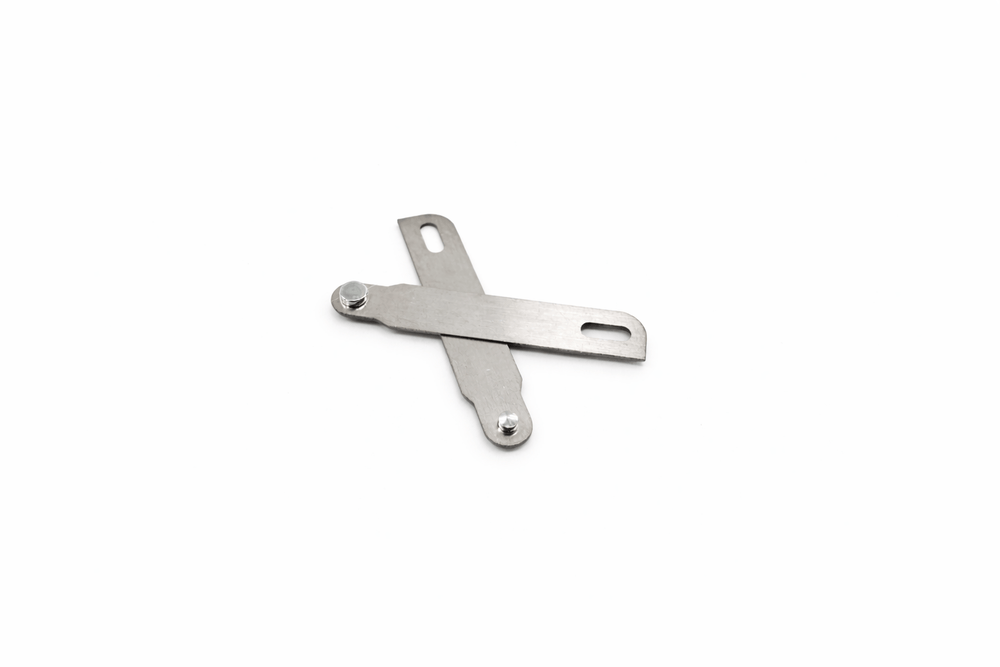
전기접점 리벳팅 공정
금형 제작의 비용적 부담을 줄이기 위해 와이어 커팅(Wire Electrical Discharge Machining, WEDM) 기술을 활용한 가공물 제작과 이후 정밀 리벳팅을 통해 접점을 고착시키는 공정은 전문적인 메커니즘 이해를 필요로 합니다.
와이어 커팅을 이용한 정밀 베이스 플레이트 가공
소량 생산 및 시제품 단계에서는 전용 프레스 금형을 설계하고 제작하는 데 막대한 비용과 시간이 소요됩니다. 이를 극복하기 위해 와이어 커팅 공법이 활용됩니다. 와이어 커팅은 전도성 소재를 마이크로미터 단위의 정밀도로 절삭할 수 있어, 리벳이 삽입될 구멍(Hole)의 공차를 극도로 정밀하게 제어할 수 있습니다.
리벳팅 공정의 성공 여부는 접점 리벳의 직경과 베이스 플레이트 구멍 사이의 끼워맞춤(Fit) 정도에 달려 있습니다. 와이어 커팅을 통해 가공된 구멍은 내벽의 거칠기가 균일하여 리벳팅 시 발생하는 응력 집중 현상을 완화하고, 전기적 접촉 저항을 최소화하는 데 기여합니다.
전기접점 리벳팅의 소성 변형 및 고착 메커니즘
리벳팅은 리벳의 하단부(Shank)를 기계적으로 압착하여 소성 변형을 일으킴으로써 두 부품을 영구적으로 결합하는 공정입니다. 특히 전기접점의 경우, 단순히 물리적으로 고정되는 것을 넘어 전기적 전도성을 확보하는 것이 중요합니다.
리벳의 뒷면을 타격하여 직경을 확장시키는 업세팅(Upsetting) 과정에서 리벳 소재는 유동적으로 변하여 베이스 플레이트의 구멍 내부를 완전히 채우게 됩니다. 이때 리벳 머리의 반대편 끝단이 버섯 모양으로 퍼지면서 강력한 체결력을 형성하며, 이를 통해 진동이나 열팽창에 의한 접점 이탈을 방지합니다.
리벳팅 방식에 따른 접점 계면의 특성 비교
전기접점 공정에서 가장 널리 사용되는 방식은 임팩트(Impact) 방식과 오비탈(Orbital) 방식입니다. 임팩트 방식은 순간적인 강한 힘으로 리벳을 타격하여 생산 속도가 빠르지만, 소재에 가해지는 충격이 커서 미세한 균열이 발생할 위험이 있습니다.
반면 오비탈 리벳팅은 리벳의 중심축을 기준으로 일정 각도 기울어진 툴이 회전하며 점진적으로 가압하는 방식입니다. 이 방식은 소재의 유동성을 극대화하여 훨씬 적은 힘으로도 정밀한 변형을 유도할 수 있으며, 전기적 특성에 치명적인 내부 기포(Void) 형성을 억제하는 데 탁월한 효과를 보입니다.
전기접점 리벳팅 공정 변수 및 품질 지표
신뢰성 높은 리벳팅을 위해서는 가압력, 가압 시간, 그리고 리벳의 돌출 길이(Protrusion Height)가 엄격히 관리되어야 합니다. 돌출 길이가 너무 짧으면 고정력이 부족하여 접점 저항이 상승하고, 너무 길면 변형이 불균일하게 일어나 외관 불량 및 기계적 강도 저하를 초래합니다. 또한, 리벳팅 후의 코킹(Caulking) 상태는 전기적 신뢰성과 직결됩니다. 접점 부위와 베이스 플레이트 사이의 밀착도가 높을수록 접촉 저항이 감소하여 통전 시 발생하는 발열량을 억제할 수 있습니다.
| 구분 | 주요 파라미터 | 영향 및 결과 | 기술적 고려사항 |
| 가공 정밀도 | 구멍 공차 (Hole Tolerance) | 리벳의 충진율 및 전단 강도 결정 | 와이어 커팅 시 오프셋 값 정밀 설정 필요 |
| 재료 특성 | 리벳 경도 (Vickers Hardness) | 소성 변형 시 필요한 압력 결정 | Ag, Cu 등 전도성 소재의 가공 경화 주의 |
| 공정 제어 | 업세팅 압력 (Upsetting Force) | 결합부의 기계적 고정력 형성 | 과도한 압력 시 베이스 플레이트 왜곡 발생 |
| 기하 구조 | 리벳 돌출비 (L/D Ratio) | 뒷면 퍼짐(Flaring)의 형상 안정성 | 좌굴(Buckling) 방지를 위한 적정 길이 산출 |
| 평가 항목 | 임팩트 리벳팅 (Impact) | 오비탈 리벳팅 (Orbital) | 스핀 리벳팅 (Spin/Radial) |
| 소재 내부 응력 | 매우 높음 (균열 위험 존재) | 낮음 (균열 발생 최소화) | 매우 낮음 |
| 접합면 밀착도 | 보통 | 매우 우수 | 우수 |
| 가공 표면 조도 | 거침 | 매끄러움 | 매우 매끄러움 |
| 전기적 접촉 저항 | 상대적으로 높음 | 낮고 안정적 | 낮음 |
| 사이클 타임 | 매우 빠름 | 보통 | 보통 |
| 적용 권장 분야 | 일반 기계 체결부 | 정밀 전자 스위치, 릴레이 | 고정밀 센서 접점 부품 |
와이어 커팅 기반의 정밀 가공과 고도화된 리벳팅 제어 기술의 결합은 전기 접점 부품의 품질을 상향 평준화하는 핵심 동력입니다. 리벳 뒷면의 변형 형상을 최적화하여 물리적 고정력과 전기적 전도성을 동시에 만족시키는 것은 고부가가치 정밀 부품 제조의 필수 요건입니다.
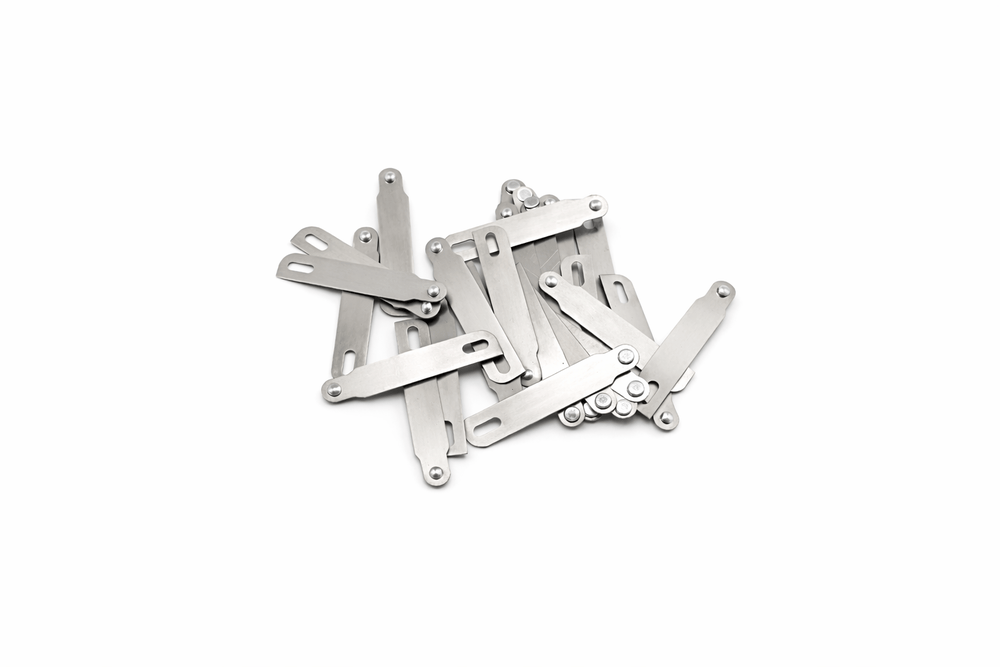
Electrical Contact Riveting Process
To reduce the high cost burden of mold manufacturing, a machining method using Wire Electrical Discharge Machining (WEDM) is applied to produce precision workpieces, followed by precision riveting to secure the contact. This process requires a professional understanding of mechanical mechanisms.
Precision Base Plate Machining Using Wire Cutting
In small-lot production and prototype development, designing and manufacturing dedicated press molds incur significant time and cost. To overcome this, wire cutting technology is used. WEDM enables conductive materials to be cut with micrometer-level precision, allowing extremely accurate control of the tolerance of the rivet insertion hole.
The success of the riveting process depends on the fit between the rivet diameter and the base-plate hole. Holes machined via wire cutting have uniformly smooth internal surfaces, which reduce stress concentration during riveting and help minimize electrical contact resistance.
Plastic Deformation and Fixation Mechanism in Electrical Contact Riveting
Riveting is a permanent fastening process in which the rivet shank is mechanically compressed to induce plastic deformation. In electrical contacts, securing electrical conductivity is just as important as mechanical fixation.
During the upsetting process, where the rear side of the rivet is pressed to expand its diameter, the rivet material plastically flows and completely fills the interior of the hole. The rear end of the rivet spreads into a mushroom-shaped form, creating strong fastening force that prevents loosening caused by vibration or thermal expansion.
Characteristics of Different Riveting Methods
The most widely applied riveting methods in electrical contact assembly are impact riveting and orbital riveting. Impact riveting uses a strong instantaneous force, resulting in fast cycle time but also introducing a risk of micro-cracks due to the high shock load applied to the material.
On the other hand, orbital riveting applies a gradually rotating pressure with a tool slightly tilted from the rivet center axis. This method maximizes material flow, enabling precise deformation with less force, while effectively suppressing internal void formation that can be detrimental to electrical characteristics.
Process Parameters and Quality Indicators in Electrical Contact Riveting
For reliable riveting quality, pressing force, pressing time, and protrusion height must be strictly controlled. If protrusion height is too short, clamping force becomes insufficient and contact resistance increases. If excessive, deformation becomes unstable, leading to poor appearance and reduced mechanical strength.
Post-riveting caulking quality is also directly linked to electrical reliability. Higher interface bonding between the contact and base plate lowers contact resistance and suppresses heat generation during current flow.
Table 1. Process Parameters and Technical Considerations
| Category | Key Parameter | Effects & Outcomes | Technical Considerations |
|---|---|---|---|
| Machining Precision | Hole Tolerance | Determines rivet fill ratio and shear strength | Precise offset tuning during wire cutting |
| Material Properties | Rivet Hardness (Vickers) | Determines required pressure during plastic deformation | Work-hardening precautions for conductive materials such as Ag and Cu |
| Process Control | Upsetting Force | Forms mechanical bonding strength | Excessive force may cause base-plate distortion |
| Geometry | Rivet Protrusion Ratio (L/D Ratio) | Stability of rear-side flaring shape | Proper length calculation to prevent buckling |
Table 2. Comparison of Riveting Methods
| Evaluation Item | Impact Riveting | Orbital Riveting | Spin/Radial Riveting |
|---|---|---|---|
| Internal Material Stress | Very High (Crack Risk) | Low (Crack Minimization) | Very Low |
| Joint Interface Bonding | Moderate | Excellent | Good |
| Surface Roughness | Rough | Smooth | Very Smooth |
| Electrical Contact Resistance | Relatively High | Low and Stable | Low |
| Cycle Time | Very Fast | Moderate | Moderate |
| Recommended Application | General Mechanical Fastening | Precision Electronic Switches and Relays | High-Precision Sensor Contact Components |
The combination of precision machining using wire cutting and advanced riveting process control is a key driving force in improving the quality of electrical contact components. Optimizing the deformation profile on the rear side of the rivet to simultaneously ensure mechanical fastening strength and electrical conductivity is essential for manufacturing high-value precision components.
추가 정보
전기접점 오비탈 리벳팅은 리벳 체결부의 소성 변형을 점진적으로 유도해 계면 밀착도와 접촉저항 안정성을 함께 확보하는 방식입니다. 와이어컷팅(WEDM)으로 리벳 홀 공차를 정밀하게 제어하면 충진율과 전단 강도, 내부 응력 분산이 개선되어 고신뢰 접점 조립에 유리하게 작동합니다.
핵심 포인트
- WEDM 홀 공차는 리벳 충진율, 전단 강도, 체결 후 접촉저항 안정성에 직접 영향을 줍니다.
- 리벳 직경과 홀 간 끼워맞춤(Fit)이 맞지 않으면 응력 집중, 변형 불균일, 밀착도 저하로 이어질 수 있습니다.
- 오비탈 리벳팅은 낮은 하중으로 점진 가압해 내부 기포(Void)와 미세 균열 리스크를 줄이는 방향으로 작동합니다.
- 임팩트 리벳팅은 사이클 타임이 빠르지만 충격 하중이 커 미세 균열 및 내부 응력 증가 가능성이 있습니다.
- 리벳 돌출 길이(Protrusion Height)와 L/D 비는 퍼짐(Flaring) 형상 안정성과 좌굴(Buckling) 리스크를 좌우합니다.
- 업세팅(Up-setting) 압력과 가압 시간은 베이스 플레이트 왜곡 및 코킹(Caulking) 상태를 함께 결정합니다.
- 리벳 소재 경도(비커스 경도)와 가공 경화는 필요한 가압력과 변형 균일성에 영향을 줄 수 있습니다.
FAQ
전기접점 리벳팅에서 WEDM(와이어컷팅)을 쓰는 이유는 무엇인가요?
시제품·소량 단계에서 전용 금형 제작 부담을 줄이면서도 마이크로미터 단위의 홀 공차 제어가 가능하기 때문입니다. 홀 내벽 조도가 균일하면 리벳팅 시 응력 집중이 완화되어 체결 안정성과 접촉저항 변동이 줄어들 수 있습니다.
오비탈 리벳팅과 임팩트 리벳팅의 가장 큰 차이는 무엇인가요?
임팩트 방식은 순간 타격으로 빠르게 성형되지만 충격 하중이 커 내부 응력과 미세 균열 리스크가 커질 수 있습니다. 오비탈 방식은 기울어진 툴이 회전하며 점진 가압하므로 적은 힘으로 변형을 유도하고 계면 밀착도 확보에 유리하게 작동합니다.
리벳 홀 공차가 접촉저항과 어떤 관계가 있나요?
공차가 맞으면 업세팅 시 리벳 소재가 홀 내부를 안정적으로 채워 밀착도가 높아질 수 있습니다. 반대로 간극이 과도하거나 편차가 크면 충진이 불완전해져 계면 미세 공극이 남고 접촉저항이 불안정해질 수 있습니다.
리벳 돌출 길이(Protrusion Height)는 왜 엄격히 관리하나요?
돌출 길이가 짧으면 퍼짐 형상이 부족해 고정력이 떨어지고, 계면 밀착도 저하로 접촉저항 상승이 나타날 수 있습니다. 돌출 길이가 과도하면 변형이 불균일해 외관 불량과 강도 저하, 베이스 플레이트 변형이 동반될 수 있습니다.
업세팅 압력이 너무 크면 어떤 문제가 생기나요?
과도한 압력은 베이스 플레이트 왜곡, 홀 주변 변형, 잔류응력 증가로 이어질 수 있습니다. 정밀 접점 조립에서는 변형 균일성과 밀착도를 우선으로 두고 압력과 시간을 함께 최적화하는 편이 안정적입니다.
오비탈 리벳팅이 내부 기포(Void)를 줄이는 이유는 무엇인가요?
점진 가압으로 소재 유동을 안정적으로 유도해 홀 내부 충진이 균일하게 진행될 가능성이 높아집니다. 전기접점에서는 계면 공극이 접촉저항과 발열 안정성에 영향을 줄 수 있어 공극 억제는 중요한 품질 포인트가 됩니다.
스핀/라디얼 리벳팅은 어떤 경우에 고려하나요?
내부 응력을 더 낮추고 표면 조도를 매끄럽게 관리해야 하는 고정밀 센서 접점 등에서 고려되는 경우가 있습니다. 다만 적용 목적과 설비 조건에 따라 사이클 타임, 변형 형상, 검사 기준을 함께 정리하는 편이 좋습니다.
리벳 소재(Ag, Cu 등)의 경도는 공정에 어떤 영향을 주나요?
경도는 소성 변형에 필요한 가압력과 변형 균일성에 영향을 줄 수 있으며, 가공 경화가 진행되면 조건이 달라질 수 있습니다. 소재 편차가 존재하면 동일 조건에서도 코킹 형상과 밀착도 분산이 커질 수 있어 사전 분류와 공정 창 설정이 유리합니다.
관련 주제 확장
1) 홀 공차와 내벽 상태가 ‘응력 분산’을 결정합니다
리벳팅은 홀 내부로 소재가 유동하며 체결력을 형성하는 공정이므로, 홀 공차와 내벽 상태가 유동 거동을 좌우합니다. 내벽 거칠기가 불균일하거나 공차가 흔들리면 국부 응력 집중이 생기고 변형 형상이 편중될 수 있습니다. 전기접점에서는 이 편중이 계면 공극과 접촉저항 변동으로 연결될 수 있어 WEDM 조건(오프셋, 컷 품질)을 함께 관리하는 편이 합리적입니다.
2) ‘밀착도’는 전기적 성능과 열 안정성의 출발점입니다
리벳 머리와 베이스 플레이트의 밀착도가 높을수록 접촉저항이 낮아지고 통전 시 발열이 줄어드는 방향으로 작동할 수 있습니다. 접촉저항 상승은 I2R 발열 증가로 이어져 산화막 성장과 프레팅 리스크를 키울 수 있으므로, 코킹 상태는 기능 품질 지표로 보는 편이 좋습니다. 따라서 외관만이 아니라 계면 연속성, 변형 형상, 변형 균일성을 검사 기준에 포함하는 접근이 유리합니다.
3) 오비탈 리벳팅은 ‘하중 프로파일’로 품질을 만듭니다
오비탈 방식은 회전하며 점진적으로 가압하는 구조라 하중 프로파일이 변형 거동을 부드럽게 유도하는 편입니다. 이 특성은 미세 균열 가능성과 내부 응력 축적을 줄이는 방향으로 작동할 수 있어 정밀 전자 스위치·릴레이 접점에 적합한 선택지가 됩니다. 실제 최적화에서는 가압력, 시간, 돌출 길이, 소재 경도를 하나의 묶음으로 두고 분산을 줄이는 방향으로 설계하는 편이 안정적입니다.
4) 소량·시제품 단계에서 금형 대체 가공의 의미
전용 프레스 금형은 단가를 낮추는 데 유리하지만 초기 리드타임과 비용이 큰 편입니다. WEDM 기반 가공은 초기 단계에서 설계 변경과 공차 검증을 빠르게 수행할 수 있어 개발 속도 관점에서 유리하게 작동합니다. 이후 양산 전환 시에는 금형화 여부를 결함 모드, 공정 능력, 검사 체계까지 포함해 판단하는 흐름이 현실적입니다.
전기접점의 구조·신뢰성 맥락을 함께 연결하려면 전기 접점(Contacts) 페이지의 관련 글과 함께 읽는 방식이 유용합니다. 리벳 기반 결합 부품 관점에서는 구조 · 연결용 부품 카테고리와 품질기준 페이지의 검사 관점(공차·형상·표면)을 함께 비교해 정리하는 흐름도 도움이 됩니다.