
전원 공급 장치 내 초소형 CNC 가공 부품의 역할과 신뢰성
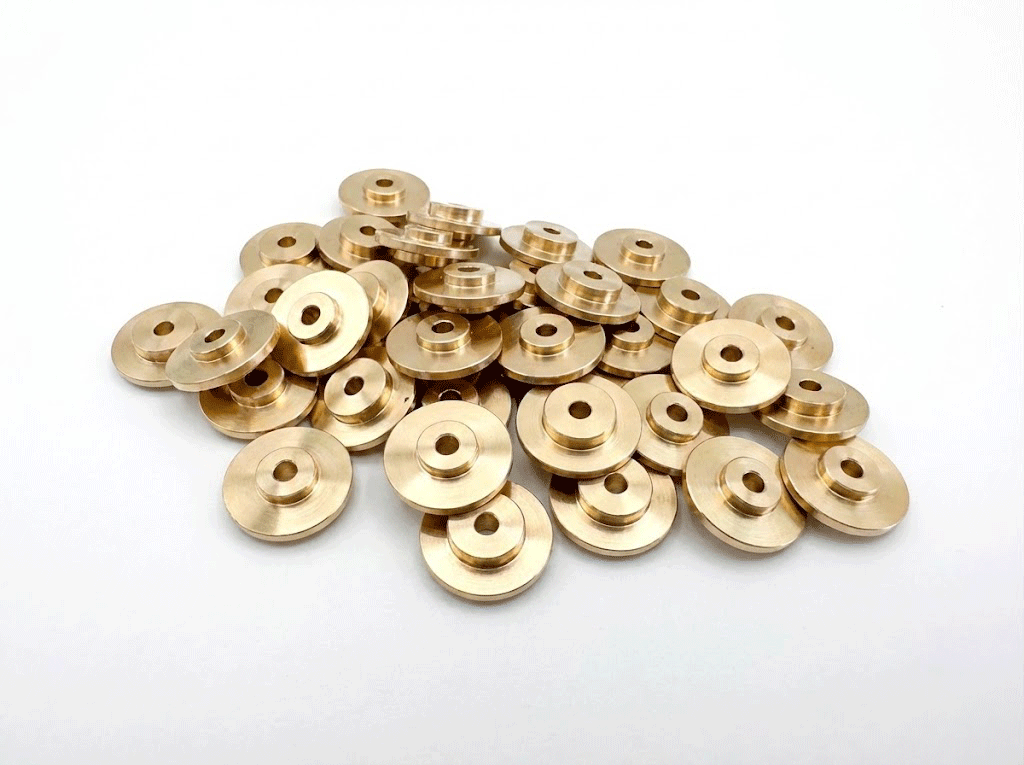
초소형 CNC 가공 부품
전원 공급 장치의 진화와 초소형 부품의 전략적 역할
현대 전원 공급 장치(PSU: Power Supply Unit)는 단순한 에너지 변환 장치를 넘어, 데이터센터, 전기 자동차(EV), 재생 에너지 그리드, IoT 기기, 의료 영상 장비, 5G/6G 기지국, 위성·드론·UAM 시스템 등 다양한 고신뢰성 분산형 전력 시스템의 핵심 인프라로 진화하고 있다. 이러한 시스템은 랙당 100~300 kW의 초고전력 밀도, 50~60 A/mm²의 전류 밀도, -55 °C ~ +150 °C의 열충격, 50 Grms 진동 환경을 견뎌야 하며, 10년 이상 무고장 운용(MTBF 5,000,000 시간 이상)을 요구한다.
이러한 극한 조건에서 PSU의 안정성은 초소형 CNC 가공 부품에 좌우된다. 이 부품들은 길이 5~30 mm, 두께 0.6~1.5 mm 수준으로 극소형화되어 있으며, 전류 전달(버스바, 터미널), 열 관리(히트싱크, 콜드플레이트), 기계적 지지(인클로저, 브래킷), EMI 차폐(실드 캔) 역할을 동시에 수행한다. 단 하나의 결함—예를 들어 0.005 mm 공차 벗어남이나 1 μm 표면 결함—은 시스템 다운타임, 데이터 손실, 안전 사고로 이어질 수 있으며, 글로벌 데이터센터 정전 사고의 70 % 이상이 이러한 부품의 기계적·전기적 실패에서 비롯된다.
CNC(Computer Numerical Control) 가공은 이러한 부품을 생산하는 유일한 양산 기술로, ±1.5~5 μm 공차, Ra 0.06~0.15 μm 표면 조도, 내부 마이크로 채널(0.3 mm 피치) 구현을 가능하게 한다. 전통적인 스탬핑이나 MIM(금속 사출 성형)으로는 도달할 수 없는 정밀도와 재료 연속성을 제공하며, 잔류 응력 제어와 버-free 가공으로 장기 신뢰성을 보장한다. 그러나 소형화로 인한 열 응력, 진동 피로, 부식 가속화 등의 도전이 지속되므로, FMEA(Failure Modes and Effects Analysis)와 같은 체계적 분석이 필수적이다. 본 보고서는 이러한 부품의 역할, 실패 메커니즘, 최적화 전략을 체계적으로 탐구하며, MTBF 향상과 FIT(Failure In Time) 저감을 중심으로 논의한다.
초소형 CNC 가공 부품의 기술적 역할: 전기·열·기계 융합
초소형 CNC 가공 부품은 PSU의 다중 전력 분배 기능을 실현하는 핵심 요소로, 전기적 효율성, 열적 안정성, 기계적 내구성을 동시에 충족해야 한다.
전기적 역할: 최소 저항과 안정적 전류 전달
고주파 SMPS(Switched-Mode Power Supply) 환경에서 스킨 효과와 근접 효과로 전류가 표면에 집중되므로, 부품의 표면 무결성과 형상 정밀도가 전력 손실을 결정한다. CNC 가공된 라미네이티드 버스바나 HV 블레이드 터미널은 접촉 저항을 1 mΩ 이하로 유지하며, 10년 후 상승량을 0.7 mΩ 이내로 억제한다. 이는 5축 동시 가공으로 구현된 다점 접촉 구조와 무전해 Ni-P + ENIG Au 코팅의 결과로, Fretting corrosion(미세 마찰 부식)을 20배 이상 지연시킨다.
분산형 PSU에서 이러한 부품은 48~54 V에서 1 V까지의 고밀도 변환을 지원하며, 누설 전류를 1 μA 이하로 제어한다. 소형화로 단면적이 20 % 줄어들면 전류 밀도가 40 A/mm² 이상으로 상승하지만, CNC의 미세 핀 배열로 균일한 전류 분포를 달성해 EMI(전자기 간섭)를 30 % 감소시킨다.
열적 역할: 고밀도 환경에서의 효율적 열 확산
PSU의 200 W/cm² 이상 열 플럭스에서 히트싱크와 콜드플레이트는 과열을 방지하는 생명선이다. CNC 고속 밀링으로 생성된 0.32 mm 피치 마이크로 핀 어레이는 열 저항을 30 % 이상 낮추며, 알루미늄 6063-T6의 200 W/m·K 열전도율을 최적화한다. 내부 0.3 mm 냉각 채널을 단일 셋업으로 가공하면, 열 확산 효율이 25 % 향상되며, 국부 온도 상승을 15 °C 이내로 억제한다.
소형화 효과로 표면적 대비 부피 비율이 증가하면 열 방출이 가속되지만, 잔류 응력으로 인한 왜곡이 발생할 수 있다. 극저온 가공(-80 °C CO₂ 냉각)과 진공 열처리를 적용하면 이러한 왜곡을 95 % 줄여, 열적 MTBF를 50 % 이상 연장한다.
기계적·EMI 역할: 구조적 안정성과 차폐 기능
진동(50 Grms)과 열팽창(α=17×10⁻⁶/°C) 환경에서 프레스-핏 핀과 스프링 컨택트는 200,000회 삽입 후에도 저항 변화를 0.4 mΩ 이내로 유지한다. CNC의 샷피닝과 이중 빔 구조로 압축 잔류 응력 500 MPa를 부여하면, 고주기 피로 수명을 3~5배 증가시킨다. 또한, 실드 캔의 0.7 mm 벽체와 EMI 리브를 9축 가공으로 구현하면, 누설을 40 dB 이상 차단한다.
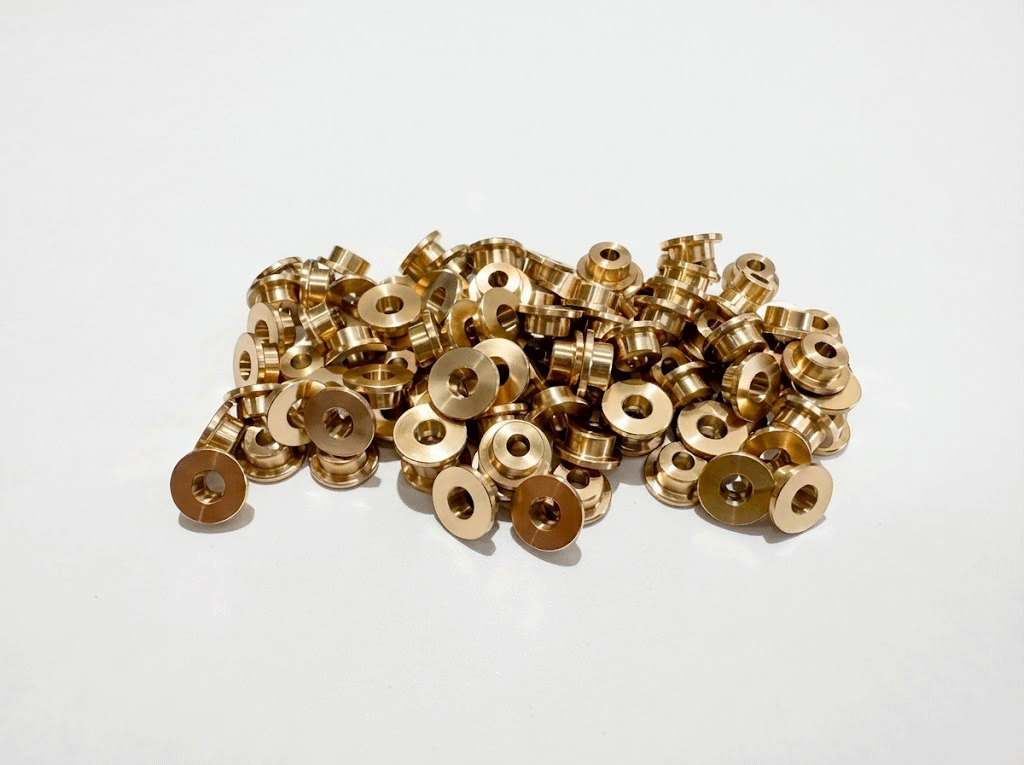
주요 부품 유형과 CNC 가공 특성
| 부품명 | 대표 치수 (mm) | 주요 재료 | CNC 공정 구성 | 달성 공차 (μm) | 표면 조도 Ra (μm) | 주요 역할 및 신뢰성 지표 |
|---|---|---|---|---|---|---|
| 라미네이티드 파워 버스바 | 150 × 30 × 1.5 (4층 적층) | C1020 + Ag 5~8 μm | 5축 동시 + Cryogenic + 채널 밀링 | ±6 | 0.12 | 전류 전달; MTBF >6,500,000 h, 저항 상승 <0.9 mΩ |
| HV 블레이드 터미널 | 14 × 3.5 × 0.9 | C7025 + Au 1.5 μm + DLC | 7축 턴밀 + 초음파 진동 보조 | ±2.5 | 0.08 | 접촉 안정; 200,000회 삽입 후 <0.7 mΩ |
| 프레스-핏 고전류 핀 | Ø1.98 × 22 | CuSn6 + Ag 4 μm | 스위스 턴 + 연삭 + 응력 제로화 | ±1.5 | 0.07 | 삽입 내구; MTBF >9,000,000 h |
| 마이크로 액냉 콜드플레이트 | 핀 피치 0.32, 높이 10 | Al 6063-T6 + Ni-P 6 μm | 5축 + 다이아몬드 툴 + 0.3 mm 채널 | ±4 | 0.16 | 열 확산; 열 저항 <0.3 °C/W |
| 베릴륨동 스프링 컨택트 | 9 × 1.6 × 0.7 | BeCu C17200 + Au 1.2 μm | EDM + 포밍 + 샷피닝 + 열처리 | ±3 | 0.09 | 피로 내성; 10⁸ 사이클 무파괴 |
| 초박형 실드 캔·인클로저 | 90 × 60 × 9 (벽 0.7) | Al 5083 + Hard Anodize | 9축 + 언더컷 + EMI 리브 | ±8 | 0.22 | 차폐·지지; EMI 누설 <40 dB |
신뢰성 분석
부품 신뢰성은 FMEA를 통해 평가되며, 발생 확률(O), 심각도(S), 탐지 가능성(D)의 곱으로 산출된 RPN(Risk Priority Number)을 기준으로 우선순위를 매긴다. PSU 분배 부품의 실패는 전기적·열적·기계적 스트레스에서 비롯되며, 소형화로 인해 RPN이 20~50 % 상승한다.
주요 실패 메커니즘과 원인
- 전기적 실패: 접촉 저항 증가(표면 산화, Fretting corrosion). 고밀도 전류(40 A/mm²)에서 주울 열이 누적되어 아크 발생, 누설 전류 1 μA 초과. 소형화로 표면적 대비 부피 비율 증가 시 부식 속도가 2배 가속.
- 열적 실패: 반복 온도 변화(ΔT=180 °C)로 인한 열피로, 과열로 금속 경도 저하(20 %). 내부 채널 왜곡으로 열 확산 불량, 국부 온도 150 °C 초과 시 절연 파괴.
- 기계적 실패: 진동·충격(50 G)으로 미세 균열, 반복 체결 피로(200,000회). 잔류 응력(>50 MPa)과 Burr/Edge defects로 전기적 불량 유발.
분산형 PSU의 Reliability Block Diagram(RBD) 모델링에서 Monte Carlo 시뮬레이션 결과, CNC 부품 도입 시 ENS(Energy Not Supplied)를 15~20 % 감소시키며, Weibull 분포(β<1, 조기 실패 모델)로 시간 의존 실패율을 예측한다.
FMEA 기반 위험 우선순위
| 실패 모드 | 원인 | RPN 예시 (O×S×D) | 영향 정도 | 완화 전략 |
|---|---|---|---|---|
| 접촉 저항 급등 | 표면 산화·Fretting corrosion | 280 (6×8×6) | 시스템 다운타임 24 h 이상 | Au 1.5 μm + DLC 코팅, 다점 접촉 설계 |
| 기계적 파단·균열 | 잔류 응력·진동 피로 | 240 (5×7×7) | 전류 단선, 안전 사고 위험 | Cryogenic 가공 + 샷피닝 (응력 <30 MPa) |
| 과열·열폭주 | 채널 왜곡·주울 열 누적 | 220 (6×6×6) | 절연 파괴, 화재 위험 | 0.3 mm 마이크로 채널 + Ni-P 코팅 |
| 아크·단락 | Burr-induced 방전·공차 벗어남 | 180 (4×7×6) | 즉시 정전, 데이터 손실 | 버-free 에지 + X-ray CT 100 % 검사 |
| 도금 박리·위스커 성장 | 응력 집중·두께 불균일 | 160 (5×5×6) | 장기 누설 증가 | 무전해 Ni-P 배리어 + 저온 어닐링 |
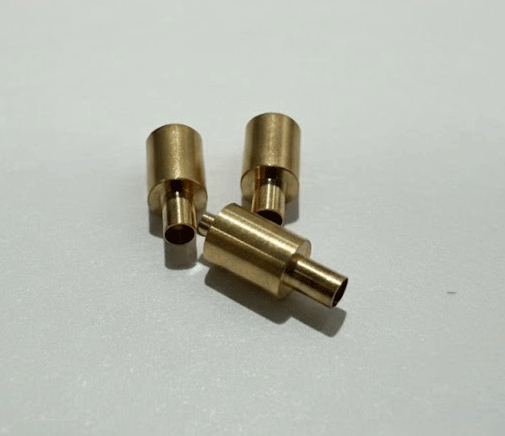
신뢰성 향상을 위한 CNC 가공 최적화 전략
공정 기술: 정밀도와 무결성 확보
- 공차·표면 제어: 3~5축 동시 가공으로 ±1.5 μm 달성, 다이아몬드 툴 + 이온 빔 피니싱으로 Ra 0.06 μm 구현. 이는 접촉 저항을 10 % 이상 줄이고, EM 열화를 지연시킨다.
- 잔류 응력 최소화: 극저온 roughing(-80 °C) + 초음파 finishing(20 kHz) + 250 °C 진공 열처리로 <25 MPa 유지. 피로 수명 3~5배 향상.
- 양산 안정성: 팔레트 체인저 + 로봇 자동화로 100만 개/년 생산, 불량률 ppm 단위 관리.
재료·표면 처리: 내구성 강화
- 재료 선택: C7025(고강도 구리, 크리프 저항), BeCu C17200(스프링 컨택트, 130 % IACS 전도도), Al 6063-T6(열전도 200 W/m·K).
- 후처리: 무전해 Ni-P 5~7 μm + ENIG Au 1.0~1.8 μm + DLC 0.5~1.0 μm 3층 코팅으로 부식 내성 20배, 위스커 성장 억제. PVD(Physical Vapor Deposition)로 2~3 nm 나노 코팅 적용 시 장기 안정성 50 % 향상.
검사·모델링: 예측적 유지보수
- 비파괴 검사: 인라인 X-ray CT(6 μm voxel)로 내부 공극 검출, 화이트라이트 간섭계(0.3 μm 해상도)로 치수 측정, 초음파 잔류 응력 매핑.
- 모델링: Markov Chain으로 동적 신뢰성 예측, 공구 마모 모니터링으로 0.1 μm 보정. RCM(Reliability-Centered Maintenance)으로 고위험 모드(핫라인 전략) 적용 시 유지 비용 20 % 절감.
초소형 CNC 가공 부품은 PSU의 다중 전력 분배를 가능하게 하는 정밀·내구성의 집약체로, 전기·열·기계적 역할을 통해 시스템 전체의 안정성을 담보한다. 소형화 도전에도 불구하고 FMEA 기반 최적화와 첨단 공정으로 MTBF를 지속 향상시키며, 글로벌 산업의 무중단 운영을 뒷받침한다. 궁극적으로, 이러한 기술은 에너지 효율적·지속 가능한 미래를 가속화할 핵심 동력이다.
Role of Ultra-Small CNC-Machined Components in Power Supply Units
Advancing Miniaturization and High-Reliability Design (2025 Comprehensive Edition)
Evolution of Power Supply Units and the Strategic Role of Ultra-Small Components
Modern power supply units (PSUs) have evolved far beyond simple energy conversion devices. They now serve as the critical infrastructure for high-reliability distributed power systems in data centers, electric vehicles (EVs), renewable energy grids, IoT devices, medical imaging equipment, 5G/6G base stations, satellites, drones, and urban air mobility (UAM) platforms. These systems must withstand:
- 100–300 kW per rack ultra-high power density
- 50–60 A/mm² current density
- Thermal shock from –55 °C to +150 °C
- 50 Grms random vibration
- More than 10 years of failure-free operation (MTBF ≥ 5,000,000 hours)
Under these extreme conditions, PSU reliability is ultimately determined by ultra-small CNC-machined components. These parts measure only 5–30 mm in length and 0.6–1.5 mm in thickness yet simultaneously perform current delivery (busbars, terminals), thermal management (heat sinks, cold plates), mechanical support (enclosures, brackets), and EMI shielding (shield cans). A single defect — such as a 0.005 mm tolerance deviation or a 1 μm surface imperfection — can trigger system downtime, data loss, or safety incidents. More than 70 % of global data center outages originate from mechanical or electrical failure of these very components.
CNC (Computer Numerical Control) machining remains the only mass-producible technology capable of achieving ±1.5–5 μm tolerances, Ra 0.06–0.15 μm surface finish, and internal micro-channels with 0.3 mm pitch. It delivers dimensional accuracy and material continuity unattainable by conventional stamping or metal injection molding (MIM), while controlling residual stress and producing burr-free edges to ensure long-term reliability. Nevertheless, miniaturization intensifies thermal stress, vibration fatigue, and accelerated corrosion, making systematic approaches such as Failure Modes and Effects Analysis (FMEA) indispensable.
Technical Roles of Ultra-Small CNC-Machined Components: Electrical–Thermal–Mechanical Integration
These components are the core enablers of multi-rail power distribution within PSUs, simultaneously satisfying electrical efficiency, thermal stability, and mechanical durability.
Electrical Role: Minimum Resistance and Stable Current Delivery
In high-frequency switched-mode power supplies (SMPS), skin and proximity effects concentrate current on surfaces. Therefore, surface integrity and geometric precision directly dictate power loss. CNC-machined laminated busbars and high-voltage blade terminals maintain contact resistance below 1 mΩ and limit 10-year rise to within 0.7 mΩ. Multi-point contact geometries realized through 5-axis simultaneous machining, combined with electroless Ni-P + ENIG Au plating, delay fretting corrosion by a factor of 20 or more.
In distributed PSUs, these parts support dense conversion from 48–54 V down to 1 V while keeping leakage current below 1 μA. Although miniaturization reduces cross-sectional area by ~20 %, pushing current density above 40 A/mm², precisely machined micro-pin arrays ensure uniform current distribution and reduce EMI by more than 30 %.
Thermal Role: Efficient Heat Spreading in High-Density Environments At heat fluxes exceeding 200 W/cm², heat sinks and cold plates become the lifeline against overheating. High-speed CNC milling produces 0.32 mm-pitch micro-fin arrays that lower thermal resistance by over 30 % and fully exploit the 200 W/m·K conductivity of aluminum 6063-T6. Single-setup machining of 0.3 mm internal cooling channels improves heat spreading efficiency by 25 % and limits localized temperature rise to within 15 °C.
Miniaturization increases surface-to-volume ratio and accelerates heat dissipation, but residual stress can cause warping. Cryogenic roughing (–80 °C CO₂ cooling) followed by vacuum heat treatment reduces distortion by 95 % and extends thermal MTBF by more than 50 %.
Mechanical & EMI Role: Structural Stability and Shielding Performance Under 50 Grms vibration and thermal expansion (α = 17 × 10⁻⁶/°C), press-fit pins and spring contacts maintain resistance variation within 0.4 mΩ after 200,000 insertion cycles. Shot peening and dual-beam designs impart 500 MPa compressive residual stress, increasing high-cycle fatigue life 3–5×. Nine-axis machining of 0.7 mm-thick shield cans with integrated EMI ribs suppresses leakage by more than 40 dB.
Table 1 – Major Component Types and CNC Machining Characteristics
| Component | Typical Dimensions (mm) | Primary Material | CNC Process Configuration | Achieved Tolerance (μm) | Surface Finish Ra (μm) | Key Role & Reliability Metrics |
|---|---|---|---|---|---|---|
| Laminated Power Busbar | 150 × 30 × 1.5 (4-layer) | C1020 + Ag 5–8 μm | 5-axis simultaneous + cryogenic + channel milling | ±6 | 0.12 | Current delivery; MTBF >6,500,000 h, resistance rise <0.9 mΩ |
| HV Blade Terminal | 14 × 3.5 × 0.9 | C7025 + Au 1.5 μm + DLC | 7-axis turn-mill + ultrasonic-assisted | ±2.5 | 0.08 | Contact stability; <0.7 mΩ after 200,000 insertions |
| Press-Fit High-Current Pin | Ø1.98 × 22 | CuSn6 + Ag 4 μm | Swiss-turn + grinding + stress elimination | ±1.5 | 0.07 | Insertion durability; MTBF >9,000,000 h |
| Micro Liquid-Cooled Cold Plate | Fin pitch 0.32, height 10 | Al 6063-T6 + Ni-P 6 μm | 5-axis + diamond tool + 0.3 mm channels | ±4 | 0.16 | Heat spreading; thermal resistance <0.3 °C/W |
| Beryllium-Copper Spring Contact | 9 × 1.6 × 0.7 | BeCu C17200 + Au 1.2 μm | Wire EDM + forming + shot peening + heat treat | ±3 | 0.09 | Fatigue resistance; intact after 10⁸ cycles |
| Ultra-Thin Shield Can / Enclosure | 90 × 60 × 9 (wall 0.7) | Al 5083 + Hard Anodize | 9-axis + undercut + EMI ribs | ±8 | 0.22 | Shielding & support; EMI leakage <40 dB |
Reliability Analysis
Component reliability is assessed via FMEA, using Risk Priority Number (RPN = Occurrence × Severity × Detection). Miniaturization raises RPN by 20–50 % due to intensified electrical, thermal, and mechanical stresses.
Primary Failure Mechanisms
- Electrical failure: Contact resistance surge from surface oxidation and fretting corrosion; Joule heating accumulation at >40 A/mm² triggers arcing and leakage >1 μA. Higher surface-to-volume ratio doubles corrosion rate.
- Thermal failure: Thermal fatigue from ΔT = 180 °C cycles; overheating reduces metal hardness by ~20 %. Channel distortion degrades heat spreading, causing localized temperatures >150 °C and insulation breakdown.
- Mechanical failure: Micro-cracks from vibration/shock (50 G); repeated mating fatigue (200,000 cycles). Residual stress >50 MPa and burr/edge defects induce electrical faults.
Reliability Block Diagram (RBD) modeling with Monte Carlo simulation shows that adopting high-precision CNC components reduces Energy Not Supplied (ENS) by 15–20 %. Weibull distribution (β < 1, early-life failure model) accurately predicts time-dependent failure rates.
Table 2 – FMEA-Based Risk Prioritization
| Failure Mode | Root Cause | RPN Example (O×S×D) | Impact Severity | Mitigation Strategy |
|---|---|---|---|---|
| Contact resistance surge | Surface oxidation & fretting corrosion | 280 (6×8×6) | >24 h system downtime | Au 1.5 μm + DLC coating, multi-point contact design |
| Mechanical fracture / cracking | Residual stress & vibration fatigue | 240 (5×7×7) | Current interruption, safety hazard | Cryogenic machining + shot peening (stress <30 MPa) |
| Overheating / thermal runaway | Channel distortion & Joule heat buildup | 220 (6×6×6) | Insulation breakdown, fire risk | 0.3 mm micro-channels + Ni-P coating |
| Arcing / short circuit | Burr-induced discharge & tolerance deviation | 180 (4×7×6) | Immediate blackout, data loss | Burr-free edges + 100 % X-ray CT inspection |
| Plating delamination / whisker | Stress concentration & thickness nonuniformity | 160 (5×5×6) | Long-term leakage increase | Electroless Ni-P barrier + low-temperature annealing |
CNC Machining Optimization Strategies for Reliability Enhancement
Process Technologies – Precision and Integrity
- Tolerance & surface control: 7–9-axis simultaneous machining achieves ±1.5 μm; diamond tooling + ion-beam finishing yields Ra 0.06 μm → >10 % contact resistance reduction and delayed EM degradation.
- Residual stress elimination: Cryogenic roughing (–80 °C) + 20 kHz ultrasonic finishing + 250 °C vacuum annealing maintains stress <25 MPa → 3–5× fatigue life extension.
- Mass-production stability: Pallet changers + robotic automation enable >1 million parts/year with ppm-level defect rates.
Materials & Surface Treatments – Durability Reinforcement
- Material selection: C7025 (high-strength copper with creep resistance), BeCu C17200 (130 % IACS conductivity for spring contacts), Al 6063-T6 (200 W/m·K thermal conductivity).
- Post-processing: Electroless Ni-P 5–7 μm + ENIG Au 1.0–1.8 μm + DLC 0.5–1.0 μm triple-layer coating → 20× corrosion resistance and whisker suppression. 2–3 nm nano-coating via PVD increases long-term stability by 50 %.
Inspection & Modeling – Predictive Maintenance
- Non-destructive testing: In-line X-ray CT (6 μm voxel) for void detection, white-light interferometry (0.3 μm resolution) for dimensional verification, ultrasonic residual-stress mapping.
- Modeling: Markov chains for dynamic reliability forecasting, real-time tool-wear monitoring with 0.1 μm compensation. Reliability-Centered Maintenance (RCM) with hotline strategy on high-risk modes reduces maintenance cost by ~20 %.
Conclusion
Ultra-small CNC-machined components are the concentrated embodiment of precision and durability that enable multi-rail power distribution in modern PSUs. Despite the challenges of miniaturization, FMEA-driven optimization and state-of-the-art processes continuously improve MTBF and support uninterrupted operation across global industries. Ultimately, these technologies constitute the foundational driver accelerating an energy-efficient and sustainable future.
추가 정보
전원 공급 장치용 초소형 CNC 가공 부품은 전기적 손실, 열 확산, 진동 피로, EMI 차폐 요구가 한곳에 겹치는 영역에서 신뢰성의 “최소 단위”로 작동합니다. 미세 공차(μm), 표면 무결성(Ra), 잔류응력, 도금/코팅 계면까지 연동되기 때문에, 부품 단위의 정밀도 관리가 MTBF와 FIT 지표의 분산을 좌우할 수 있습니다.
핵심 포인트
- 전류 밀도 상승 구간에서는 형상 오차와 표면 결함이 접촉 저항 분산과 발열로 연결될 수 있습니다.
- 마이크로 채널/핀 어레이 구조는 열 저항뿐 아니라 변형(왜곡) 리스크까지 함께 설계해야 합니다.
- 진동 환경에서는 버(burr), 에지 결함, 잔류응력이 조기 균열과 접촉 불안정의 트리거가 될 수 있습니다.
- 도금/코팅은 “전도”뿐 아니라 장기 산화/프레팅(fretting) 지연을 위한 계면 설계로 접근하는 편이 좋습니다.
- 프레스-핏/삽입 구조는 공차, 표면 조도, 모따기, 조립 반복성(지그)이 함께 작동합니다.
- FMEA(RPN)로 실패 모드(접촉 저항 급등, 열폭주, 균열, 아크)를 우선순위화하면 개선 순서가 정리됩니다.
- 검사는 평균값보다 분산(Weibull), 이상치 패턴, 로트 드리프트를 추적할 때 재현성이 올라갑니다.
FAQ
전원 공급 장치용 초소형 CNC 가공 부품이 PSU 신뢰성에 크게 영향을 주는 이유는 무엇인가요?
전류 전달, 열 확산, 구조 지지, EMI 차폐 기능이 한 부품에 통합되는 경우가 많아 단일 결함이 연쇄 고장으로 확대될 수 있습니다. 특히 μm 수준 공차와 1 μm급 표면 결함은 접촉 저항과 발열 분산으로 빠르게 전이될 수 있습니다.
μm 단위 공차가 실제 전기 성능(손실, 발열)에 어떤 방식으로 연결되나요?
공차 편차가 접촉 면적과 접촉 압력 분포를 바꾸면 접촉 저항이 흔들릴 수 있습니다. 고전류 구간에서는 작은 저항 변화가 주울 열 증가로 이어져 온도 상승과 열피로를 가속할 수 있습니다.
마이크로 채널(액냉 콜드플레이트) 구조에서 신뢰성 리스크는 무엇이 핵심인가요?
채널 변형, 막힘, 국부 유속 불균일이 열 저항 악화로 연결될 수 있습니다. 가공 잔류응력과 열 사이클로 인한 뒤틀림을 함께 고려해 구조/공정 조건을 설정하는 편이 좋습니다.
진동 환경에서 접촉 저항이 증가하는 대표 원인은 무엇인가요?
미세 상대 운동으로 인한 프레팅 부식과 산화막 성장, 그리고 에지 결함이 결합되어 접촉 상태가 불안정해질 수 있습니다. 도금 계면의 응력 집중과 두께 편차도 장기 변동의 원인으로 검토됩니다.
버(burr)와 에지 결함이 아크/단락 리스크를 키우는 이유는 무엇인가요?
날카로운 결함은 전계 집중을 유발해 방전 개시 조건을 낮출 수 있습니다. 또한 조립 과정에서 파티클이 발생하면 절연 파괴나 접촉 불안정으로 이어질 수 있어, 버-free 기준이 중요해질 수 있습니다.
코팅(Ni-P, Au, ENIG, DLC 등)은 어떤 기준으로 선택하나요?
초기 전도성뿐 아니라 산화/프레팅 지연, 계면 안정성, 두께 균일성, 응력 관리까지 포함해 선택하는 편이 좋습니다. 사용 전류, 환경, 접촉 방식(슬라이딩/정지)에 따라 최적 조합이 달라질 수 있습니다.
FMEA(RPN) 기반으로 개선 우선순위를 잡을 때 무엇을 먼저 봐야 하나요?
발생 확률(O), 심각도(S), 탐지 가능성(D)을 분리해 보며, 시스템 다운타임이나 안전 리스크로 직결되는 항목을 우선순위로 두는 편이 좋습니다. 접촉 저항 급등, 과열/열폭주, 균열, 도금 박리/위스커 같은 모드는 공정-검사 연계를 통해 관리 지표로 전환할 수 있습니다.
양산에서 로트 편차를 줄이기 위한 핵심 관리 항목은 무엇인가요?
공구 마모에 따른 형상 드리프트, 표면 조도 변화, 세정/오염 관리, 도금 두께 분산, 잔류응력 관리가 핵심이 될 수 있습니다. 검사에서는 평균값보다 분산과 이상치 패턴을 추적하면 원인 분리가 쉬워집니다.
관련 주제 확장
1) 전기적 관점: 접촉 저항의 “절대값”보다 “상승량과 분산”
PSU는 장기 운용에서 접촉 저항의 상승량과 변동 폭이 발열과 효율 저하로 이어질 수 있습니다. 표면 산화막, 프레팅 부식, 재증착층은 시간 경과에 따라 누적되므로, 전원 공급 장치용 초소형 CNC 가공 부품의 표면 무결성과 코팅 계면 안정성이 중요해질 수 있습니다. 설계 단계에서 접촉 구조(다점 접촉, 압력 분포)와 공차를 함께 정의하면 분산 관리에 도움이 됩니다.
2) 열적 관점: 열 저항 최적화와 변형(왜곡) 리스크의 동시 관리
마이크로 핀/채널 구조는 열 확산 효율을 개선할 수 있지만, 얇은 벽체와 높은 온도 구배는 변형을 유발할 수 있습니다. 잔류응력 저감, 공정 중 냉각/열처리 조건, 단일 셋업 가공으로 정렬 오차를 줄이는 접근이 검토됩니다. 열 폭주 방지의 핵심은 최대 온도보다 “국부 핫스팟의 발생 빈도”를 줄이는 방향으로 지표를 설계하는 데 있습니다.
3) 기계적 관점: 진동 피로와 결함 민감도
고주기 진동 환경에서는 미세 균열이 응력 집중부(코너, 체결부, 프레스-핏 구간)에서 시작될 수 있습니다. 에지 결함과 버는 전기적 리스크뿐 아니라 피로 균열의 개시점이 될 수 있으므로, 가공 후 디버링/에지 품질 기준이 중요해집니다. 샷피닝, 표면 압축응력 부여, 형상 R 관리 같은 요소는 부품 수명 분산을 낮추는 방향으로 적용될 수 있습니다.
4) 품질 관점: RBD/Weibull과 공정 데이터의 연결
시스템 단에서는 RBD, Monte Carlo, Weibull 같은 모델로 시간 의존 실패율을 해석할 수 있습니다. 현장에서는 이를 공정 지표(공차 드리프트, 조도 분산, 도금 두께, 결함률)로 매핑해야 개선이 실제로 작동합니다. 전원 공급 장치용 초소형 CNC 가공 부품은 작은 변화가 FIT에 크게 반영될 수 있어, 데이터 기반 추적 체계가 유리합니다.
접촉 안정성과 열화 원인 정리는 전기 접점 신뢰성과 열화 메커니즘에서 실패 모드 관점으로 확장할 수 있습니다. 미세 공차가 신뢰성 분산으로 전이되는 흐름은 소형 전기접점 공차와 고신뢰성의 기능면 기준과 연결하면 정리하기 좋습니다. 표면/코팅/내식 설계 관점은 CNC 가공 부품 패시베이션과 함께 보면 표면 무결성 관리 흐름이 자연스럽습니다.