
전기접점 소형화에 따른 정밀 공차 관리
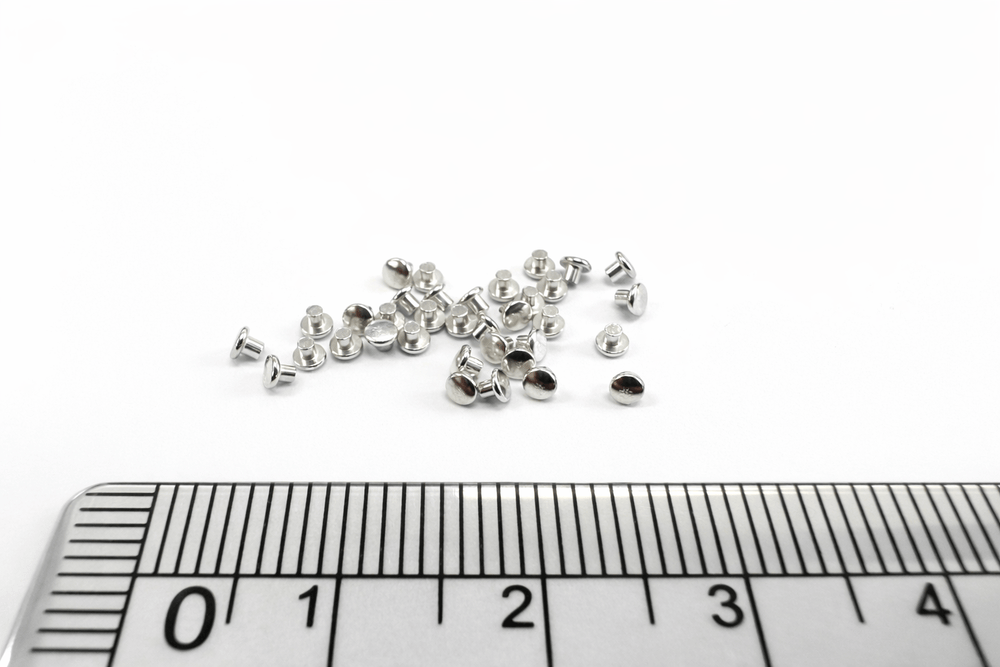
소형 전기접점의 고신뢰성 확보를 위한 정밀 공차
전자부품 산업은 고집적화·경량화·고기능화 요구를 충족하기 위해 지속적으로 부품 크기를 축소하고 있습니다. 이 과정에서 전기접점은 단순한 기계적 접촉 요소가 아니라 전류 전달·신호 무결성·열 관리·재료 신뢰성·표면 공학이 복합적으로 작용하는 핵심 요소로 자리 잡고 있습니다. 특히 피치 간격이 1mm 이하로 축소되고 접점 직경이 마이크로미터 영역에 접근하면서, 전기접점은 기존 설계 패러다임을 넘어서는 정밀한 가공의 접근이 요구되고 있습니다.
접촉 저항과 전류 분포 변화
접점이 미세화되면 전류가 흐를 수 있는 유효 면적이 제한되기 때문에 실질적인 전류 밀도가 증가합니다. 이때 접촉점 주변에는 미세 변형과 마모가 발생하며, 접촉면 미세 거칠기에 의해 전류가 일부 미세 접촉점으로 집중되는 현상이 일어납니다. 이러한 집중 전류는 국부 발열을 유발하며, 발열은 다시 접촉 저항을 상승시키는 피드백 구조를 형성합니다.
또한 접점 표면에 미세 산화막이 존재할 경우 전자 터널링 경로가 불균일해져 저항 변동 노이즈가 발생할 가능성이 증가합니다. 특히 고주파 신호 전달 환경에서는 미세 인덕턴스·캐패시턴스 변화까지 복합적으로 작용하여 신호 왜곡이 확대될 수 있습니다.
구조 강성과 접촉 압력 분포
접점의 두께와 폭이 감소할수록 구조 강성은 급격히 낮아지며, 외력·열팽창·반복 삽입력에 의한 변형 가능성이 증가합니다. 이때 접촉 압력이 국부적으로 집중되면 점 접촉 영역에서 소성 변형이 누적되는 현상이 발생합니다. 이는 마모 가속 및 접촉 저항 증가의 근본 원인이 됩니다.
또한 진동·충격 환경에서는 미세 접점이 접촉 이탈을 경험할 가능성이 높으며, 불안정한 마이크로 아크가 발생할 위험성도 증가합니다. 따라서 기계적 신뢰성 확보는 전기적 안정성과 직결되는 요소라 할 수 있습니다.
치수·형상·위치 공차
소형 접점에서 공차는 단순한 제조 허용 범위가 아니라 성능 정의 변수로 간주됩니다. 위치 공차가 ±0.02mm만 초과하더라도 유효 접촉 면적이 30% 이상 감소하는 경우가 발생하며, 이는 접촉 저항·열안정성·아크 발생 가능성에 직접 영향을 미칩니다.
평탄도와 표면 거칠기 역시 중요 요소입니다. 표면이 완전 평면이 아닐 경우 실제 접촉은 극히 일부 영역에서만 이루어지며, 이로 인해 전류 분포가 국부 집중되는 현상이 커집니다. 소형 접점 제조에서는 마이크로 단위 치수 정밀도를 달성해야 하므로 금형의 강성, 열 안정성, 가공 정밀도가 매우 중요합니다.
특히 Burr 발생은 내부 단락·이물 유입·절연 파괴로 이어질 수 있기 때문에 허용 수준을 극단적으로 낮게 제한해야 합니다.
표면 처리 및 도금 기술
소형 접점에서는 다음 요소가 필수적으로 관리됩니다.
• 도금층 밀착력
• 미세 기공(Pinhole) 제어
• 내부 확산 방지
• 박리 억제
• 부식 안정성 확보
| 관리 항목 | 일반 접점 (약 5mm 이상) | 소형 접점 (약 1~3mm) | 핵심 적용 기술 |
|---|---|---|---|
| 위치 공차 | ±0.1mm | ±0.02mm 이하 | 자동 정렬·정밀 가이드 |
| 표면 거칠기(Ra) | 1.6μm 수준 | 0.4μm 이하 | 화학 연마·초정밀 연삭 |
| 접촉 하중 | 스프링 여유 관리 | 미세 하중 정밀 제어 | 실시간 로드셀 피드백 |
| 허용 마모 | 두께 20% | 두께 5% 미만 | 고경도 합금·다층 도금 |
| 검사 방식 | 육안·샘플링 가능 | 고배율 전수 검사 | AI·비전 분석 시스템 |
재료공학적 접근과 합금 설계
소형 전기접점은 고전류·고온 환경에서도 물성 안정성을 유지해야 하므로, 은-니켈·은-산화주석·팔라듐 합금 등 분산 강화 계열이 주로 적용됩니다.
입자 분포가 균일해야 열·아크·마모 하중이 특정 영역에 집중되지 않으며, 이는 수명 안정성과 직결됩니다. 분말야금 및 내부 산화 공정은 이러한 미세 구조를 형성하는 핵심 기술로 자리 잡고 있습니다.
신뢰성 평가와 수명 보증 체계
소형 전기접점은 다음 항목에서 신뢰성을 검증합니다.
• 반복 접촉 내구성 시험이 수행됩니다
• 고전류 아크 환경 평가가 적용됩니다
• 고온·고습 안정성 시험이 필요합니다
• 진동·충격 내구성이 검증됩니다
• 산화·부식 가속 시험이 병행됩니다
이러한 평가를 통과한 접점만이 장기 미션 크리티컬 환경에 적용될 수 있습니다.
자동차·항공우주·의료 장비·산업 자동화 분야에서는 소형 접점의 오작동이 곧 시스템 안전 문제로 직결되기 때문에, 품질 규격이 일반 상업용 제품보다 훨씬 엄격하게 설정됩니다.
또한 환경 스트레스 요인이 복합적으로 작용하기 때문에, 구조 설계·재료 설계·공정 설계가 통합적으로 수행되어야 합니다.
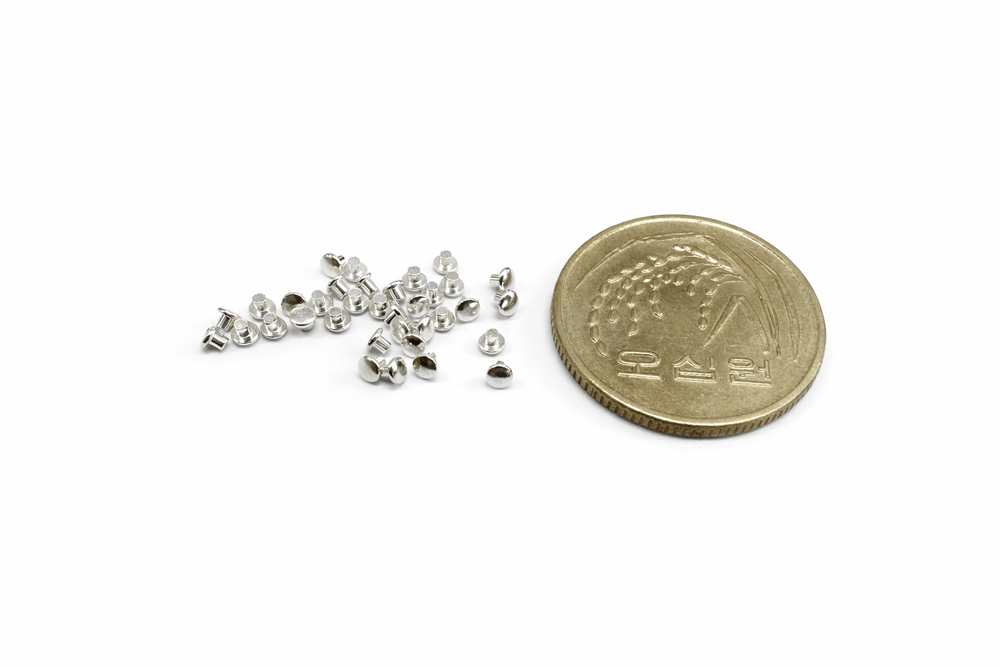
Ensuring High Reliability in Small Electrical Contacts Through Precision Tolerances
The electronics industry continues to reduce component size in order to meet growing demands for higher integration, lighter weight, and enhanced functionality. In this process, electrical contacts have evolved from being simple mechanical interfaces into critical elements where current transfer, signal integrity, thermal management, material reliability, and surface engineering interact in complex ways.
As pitch spacing shrinks below 1 mm and contact diameters approach the micrometer range, electrical contact design now requires precision manufacturing approaches that go far beyond conventional engineering paradigms.
Changes in Contact Resistance and Current Distribution
As contacts become smaller, the effective conductive area decreases, leading to significantly higher current density. This can cause micro-deformation and wear around the contact region, while microscopic surface roughness concentrates current into localized micro-contact spots.
This current crowding effect generates localized heating, which in turn increases contact resistance, forming a continuous feedback loop.
If a thin oxide film exists on the contact surface, electron tunneling paths become irregular, increasing the probability of resistance fluctuation noise. Particularly in high-frequency environments, micro-inductance and capacitance variations compound these effects and can amplify signal distortion.
Structural Stiffness and Contact Pressure Distribution
As the thickness and width of contacts are reduced, structural stiffness decreases sharply, increasing the likelihood of deformation due to external forces, thermal expansion, and repeated insertion cycles. When contact pressure becomes concentrated in small zones, plastic deformation accumulates at the micro-contact point.
This is a primary cause of wear acceleration and rising contact resistance.
Furthermore, in vibration or shock environments, small contacts are more likely to temporarily disengage, increasing the risk of unstable micro-arcing. Mechanical reliability is therefore directly linked to electrical stability.
Dimensional, Form, and Positional Tolerances
In small-scale contacts, tolerances are not simply manufacturing limits — they function as performance-defining parameters. If positional tolerance exceeds ±0.02 mm, effective contact area may decrease by more than 30%, directly impacting contact resistance, thermal stability, and arc generation probability.
Flatness and surface roughness are also critical factors. If the surface is not perfectly planar, real contact occurs only at a few microscopic points, further increasing current concentration.
Because small contacts require micro-scale dimensional precision, tooling rigidity, thermal stability, and machining accuracy become key determinants of product quality.
In particular, burr formation must be minimized, as burrs can lead to internal short circuits, foreign material contamination, or insulation breakdown.
Surface Treatment and Plating Technology
The following parameters must be strictly controlled in small-scale electrical contacts:
• Plating adhesion strength
• Control of micro-pores (pinhole prevention)
• Suppression of internal diffusion
• Prevention of delamination
• Long-term corrosion stability
Comparison of Tolerance and Reliability Requirements
| Management Item | Standard Contacts (Approx. ≥ 5 mm) | Small Contacts (Approx. 1–3 mm) | Key Applied Technology |
|---|---|---|---|
| Positional Tolerance | ±0.1 mm | ±0.02 mm or below | Automatic alignment & precision guide systems |
| Surface Roughness (Ra) | Around 1.6 μm | 0.4 μm or below | Chemical polishing & ultra-precision grinding |
| Contact Load | General spring margin control | Micro-load precision control | Real-time load-cell feedback |
| Allowable Wear | Up to 20% thickness reduction | Less than 5% thickness reduction | High-hardness alloys & multi-layer plating |
| Inspection Method | Visual / sampling inspection | High-magnification full inspection | AI-based vision analysis systems |
Materials Engineering and Alloy Design
Small electrical contacts must maintain mechanical and electrical stability even under high current and elevated temperatures. Therefore, dispersion-strengthened alloys such as Ag-Ni, Ag-SnO₂, and palladium-based alloys are commonly used.
Uniform particle distribution prevents localized concentration of thermal, arc, and wear loads, which is directly linked to lifetime stability. Powder metallurgy and internal oxidation processing are core technologies for forming these microstructures.
Reliability Evaluation and Lifetime Qualification
The reliability of small electrical contacts is typically verified through the following evaluations:
• Repeated contact endurance testing
• High-current arc durability testing
• High-temperature and humidity resistance testing
• Vibration and impact resistance testing
• Accelerated oxidation and corrosion testing
Only contacts that successfully pass these evaluations are approved for use in long-term mission-critical environments.
Industries such as automotive, aerospace, medical devices, and industrial automation enforce standards that are far stricter than general consumer electronics, as failure of small contacts can directly translate into system-level safety issues.
Because environmental stress factors act simultaneously in real-world applications, structural design, materials engineering, and process control must be integrated into a unified reliability strategy.
추가 정보
소형 전기접점 정밀 공차는 초기 치수 합격 여부보다 사용 중 접촉 안정성과 변화율 관리에 더 큰 영향을 줍니다. 정밀 공차는 접촉력 분산, 접촉저항 변동, 프레팅과 발열의 발생 확률을 좌우하며, 고신뢰 환경에서는 공차의 방향성과 조합이 핵심 설계 변수로 작동합니다.
핵심 포인트
- 절대 치수보다 공차의 방향성(편차 이동)이 접촉력 분산과 수명에 영향을 줄 수 있습니다.
- 소형 접점에서는 미세 편차가 접촉면적과 실제 전류 경로를 크게 바꿀 수 있습니다.
- 공차 누적(stack-up)은 단품 합격이라도 조립 후 접촉 불안정으로 나타날 수 있습니다.
- 동심도·평행도·원통도는 접촉 편중과 국부 마모의 주요 원인이 됩니다.
- 표면 거칠기 변화는 공차 범위 내에서도 접촉저항 변동을 유발할 수 있습니다.
- 도금 두께 편차는 유효 치수와 초기 접촉 특성을 동시에 바꿀 수 있습니다.
- 공정 변동(Cpk) 관리 없이 공차만 축소하면 양산 안정성이 떨어질 수 있습니다.
FAQ
소형 전기접점에서 공차가 특히 중요한 이유는 무엇인가요?
접촉면적이 작을수록 미세 치수 변화가 접촉력과 실제 접촉점 수에 직접 영향을 줍니다. 결과적으로 접촉저항 변동, 발열, 간헐 접촉 발생 확률이 커질 수 있습니다.
공차를 줄이면 무조건 신뢰성이 좋아지나요?
공차 축소 자체보다 공정 능력(Cpk)과 변동 폭 관리가 함께 이뤄지는지가 중요합니다. 공정 변동이 큰 상태에서 공차만 좁히면 불량률과 편차 이동 리스크가 커질 수 있습니다.
공차 누적(stack-up)은 접점에서 어떻게 문제를 일으키나요?
단품 기준으로는 합격이지만 조립 후 기준면이 어긋나 접촉력이 한쪽으로 쏠릴 수 있습니다. 이 경우 국부 마모와 접촉저항 상승이 빠르게 진행될 수 있습니다.
동심도와 평행도가 접촉 신뢰성에 미치는 영향은 무엇인가요?
동심도 불량은 회전·삽입 시 접촉 편중을 만들고, 평행도 불량은 스프링 접점 하중 분산을 깨뜨릴 수 있습니다. 두 요소 모두 장기 반복에서 프레팅과 비대칭 마모로 이어질 가능성이 있습니다.
표면 거칠기는 공차와 별개의 문제인가요?
거칠기는 공차 범위 내에서도 실제 접촉점 분포와 접촉저항에 영향을 줄 수 있습니다. 특히 저전류 신호 접점에서는 거칠기 변화가 간헐 접촉으로 먼저 나타날 수 있습니다.
도금 두께 편차는 어떻게 관리하는 편이 좋나요?
도금은 기능층이므로 평균 두께뿐 아니라 분산과 핀홀 발생 가능성까지 함께 관리하는 접근이 필요합니다. 치수 공차와 도금 공차를 분리해 정의하면 실제 유효 치수 변동을 줄이는 데 도움이 됩니다.
소형 접점에서 검사 항목은 무엇을 우선으로 보나요?
절대 치수 외에 동심도, 평행도, 접촉부 형상, 표면 상태를 함께 보는 편이 실사용 조건에 가깝습니다. 초기 접촉저항과 반복 작동 후 변화 추이를 함께 확인하면 편차 리스크를 줄일 수 있습니다.
정밀 공차 설계는 언제 확정하는 것이 좋은가요?
양산 전 시제품 단계에서 공정 변동과 조립 조건을 함께 반영해 확정하는 접근이 안정적입니다. 도면 단계에서 과도하게 타이트한 공차를 고정하면 양산에서 수정 비용이 커질 수 있습니다.
관련 주제 확장
1) 절대 공차보다 중요한 ‘공차의 방향성’
공차 중심이 한쪽으로 이동하면 평균값은 합격이라도 접촉력 분산이 무너질 수 있습니다. 소형 전기접점에서는 이 편차 이동이 접촉저항 증가와 발열로 바로 연결되는 경우가 많습니다. 따라서 평균값 관리뿐 아니라 분포 형태와 이동 추세를 함께 보는 편이 합리적입니다.
2) 기하공차가 접촉 안정성에 미치는 영향
원통도, 동심도, 평행도는 삽입·회전·반복 작동에서 접촉 편중을 좌우합니다. 단순 치수 합격보다 기하공차 관리가 장기 마모와 프레팅 억제에 더 직접적으로 작용할 수 있습니다. 특히 스프링 접점 구조에서는 하중 분산 관점의 기하공차 해석이 필요합니다.
3) 공차와 표면 상태의 상호작용
동일한 치수 공차라도 표면 거칠기와 가공 방향에 따라 실제 접촉 조건은 달라질 수 있습니다. 미세 버, 가공결 방향, 연마 상태는 접촉점 안정성과 초기 저항 변동에 영향을 줄 수 있습니다. 공차 설계는 표면 관리 기준과 함께 묶어 정의하는 편이 현실적입니다.
4) 검사 기준은 ‘초기값’보다 ‘변화율’을 봅니다
초기 접촉저항과 치수는 통과 조건일 뿐이며, 반복 사용 중 변화율과 분산 확대가 신뢰성에 더 큰 신호가 됩니다. 온도상승, 접촉저항 드리프트, 간헐 접촉 발생 빈도를 함께 추적하면 공차 리스크를 조기에 인지할 수 있습니다. 이는 고신뢰 전기접점 설계에서 자주 활용되는 평가 관점입니다.
소형 전기접점의 구조와 소재 흐름을 함께 보려면 전기 접점(Contacts) 카테고리의 관련 글을 참고하면 문맥 연결에 도움이 됩니다. 정밀 치수 관리 관점에서는 CNC 정밀 가공과 품질 기준 페이지의 공정·검사 기준 흐름을 함께 비교해 읽는 방식도 유용합니다.