
MS SPEC 엠에스 스펙 - 현대·기아차 기술 규격
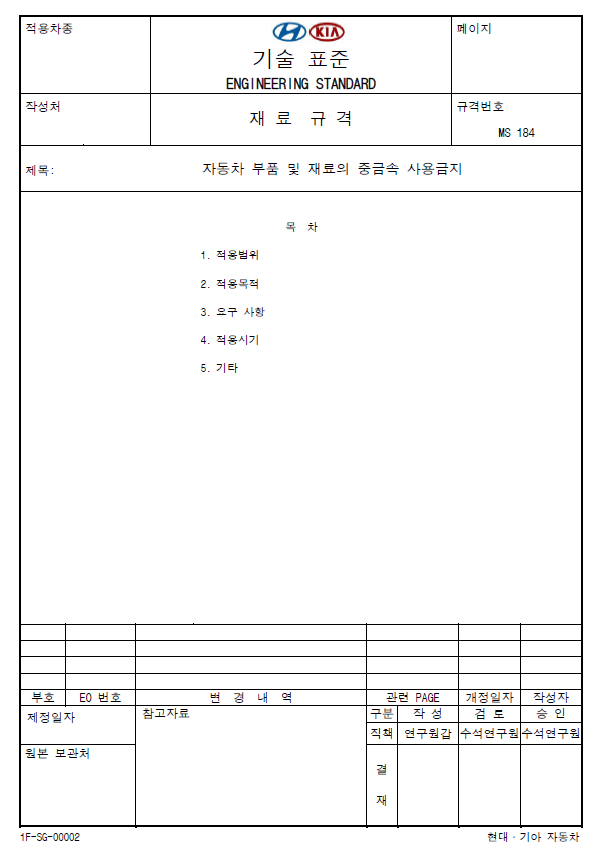
자동차 업계나 벤더에 관련해 있다면 한 번쯤 들어봤을 MS SPEC(엠에스 스펙).
막상 찾아보면 정보가 많지 않고 생소한 용어라서 “도대체 뭐지?” 하고 검색해 들어오는 경우가 많습니다.
MS SPEC은 Material Specification의 약자로,
현대자동차·기아자동차가 부품 납품업체에게 요구하는 재료 성능 기준을 정의한 표준 규격서입니다.
쉽게 말하면, 부품 소재가 차량에 사용될 만큼 충분히 안전하고 신뢰할 수 있는지 평가하기 위한 기준서라고 이해하면 됩니다.
MS SPEC이 필요한 이유
현대·기아차는 모든 부품이 일정 수준 이상의 품질을 충족하도록 자체 기술 표준을 운영하고 있습니다.
의미를 아주 쉽게 풀어 설명하면 다음과 같습니다.
“우리가 정한 기술 기준에 따라
이러이러한 시험을 통과해야만
우리 차에 납품할 수 있다.”
그래서 고객사에서 “MS SPEC 자료 주세요”라고 하면
대부분의 경우 그 규격에 맞춰 진행한 시험성적서를 요청하는 뜻입니다.
MS SPEC은 온라인에서 쉽게 구할 수 없다
MS SPEC은 현대·기아차의 내부 기술 문서입니다.
공개본이 거의 없고, 규격 자체도 품목별로 매우 다양합니다.
따라서 자신이 공급하는 제품에 따라
어떤 MS 규격을 따라야 하는지 먼저 확인해야 합니다.
예시)
플라스틱 내장재 → 내후성·내광성 규격
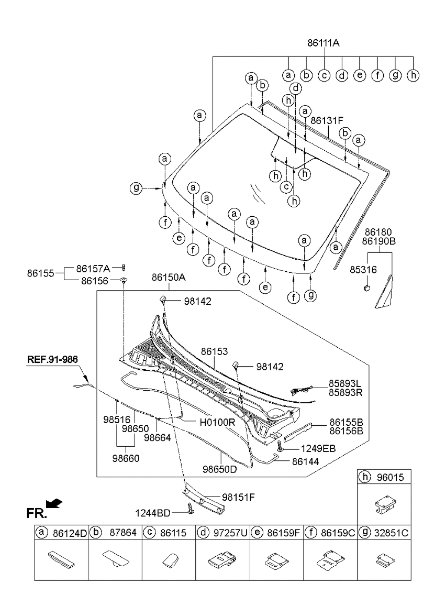
유리·윈드실드 → 강도·비산성·투과율 등
PCB/FPCB → 동박 적층판 규격
테이프·필름 → 접착력·내환경성 규격
MS SPEC이 의미하는 시험 성적서
조금 직설적으로 말하면,
“이 제품을 우리 기준에 맞춰
테스트하고
결과를 문서(시험성적서)로 정리해서 제출하세요.”
라는 의미입니다.
시험 항목에는 보통 아래 요소들이 포함됩니다.
강도·충격·인장 등 기계적 물성
내열성·내한성·내습성
내후성·UV 노출 테스트
화학 성분·유해물질 검사
난연성 및 연소 시험
광학적 특성(투과율·반사율)
냄새(VOC) 시험
환경 규제 관련 항목
즉, 규격에 맞는 시험을 수행해 그 결과를 제출하는 것이 MS SPEC 자료입니다.
대표적인 MS SPEC 규격 번호 정리
아래 표는 업계에서 자주 언급되는 대표 MS SPEC 예시입니다.
| 규격번호 | 항목명 | 설명 |
|---|---|---|
| MS200-42 | 플라스틱 표면처리 부품 | 리얼우드·필름·인몰드·진공증착·인쇄 등 표면 가공 부품의 물성 시험 |
| MS210-05 | 플라스틱 성형품(내장용) | 내장재의 내후성·내광성 등 기본 물성 평가 |
| MS211-46k | PA66(비강화) 성형품 | PA66 비강화 소재의 기계적 물성 평가 |
| MS213-71 | GF 강화 PP | 도어 모듈용 GF 강화 PP 소재의 물성 시험 |
| MS215-01 | Polycarbonate(PC) | PC 소재의 일반 성능 평가 |
| MS235-01 | Acrylic(PMMA) | PMMA 소재의 물성 평가 |
| MS256-33 | 가열발포 Sheet | 방음·방수 목적의 발포 시트 품질 규정 |
| MS300-08 | Flammability | 내장재 연소성 시험 |
| MS300-34 | Odor Testing | 내·외장재 냄새 시험 |
| MS311-15 | 저반사 PC 필름 | 클러스터 패널용 PC 필름의 광학·환경 물성 평가 |
| MS711-10 | 양면점착 Tape | 마크·엠블럼 부착용 양면테이프 평가 |
| MS725-04 | 발포성 Tape Sealer | 진동·흡음용 발포 테이프 규격 |
| MS941-01 | PCB용 CCL | 전장 PCB용 동박적층판의 물성 분석 |
| MS941-02 | FPCB용 FCCL | 연성 동박적층판의 재료 평가 |
| MS941-07 | 열가소성 고분자 | 사출 부품용 고분자 소재 품질 기준 |
필요한 시험 항목은 규격 번호마다 모두 다르므로
반드시 해당 규격서에 맞춘 시험을 진행해야 합니다.
✔ 중간 벤더 업체라면
→ 제품을 만든 원청에게 “MS SPEC 등록/시험한 자료 있나요?”라고 문의 후 성적서를 받으면 됩니다.
✔ 직접 생산한다면
→ 설비가 있으면 자체 시험,
→ 없으면 KTR, KCL, 고분자시험연구소 등 외부 시험기관에 의뢰하면 됩니다.
왜 이렇게 까다로울까?
자동차는 “사람의 생명과 직결되는 제품”입니다.
어릴 적 KS마크가 믿음의 기준이었던 것처럼,
자동차 업계에서는 MS SPEC이 신뢰의 최소 기준입니다.
조금이라도 부품 품질이 떨어지면
실제 사고로 이어질 위험이 있기 때문에
자동차 제조사들이 자체 규격을 만들고 이를 엄격하게 관리하는 것은 당연한 일이죠.
정리하자면
MS SPEC = 현대·기아차 기술 표준 규격(Material Specification)
특정 소재·부품이 규격에 맞게 테스트되었는지 확인하는 자료
시험성적서를 제출해야 납품 가능
규격 번호에 따라 시험 항목이 모두 다름
신뢰성과 안전성을 확보하기 위한 필수 기준
MS SPEC이란?
현대자동차그룹(Hyundai Motor Group)이 사용하는 자동차 부품 및 소재의 기술 표준(Material Specification)을 의미합니다. 이는 현대자동차·기아자동차·제네시스 등 그룹 내 모든 차종에 적용되며, 부품의 품질·안전·내구성을 확보하기 위해 공급업체가 반드시 충족해야 하는 내부 기준입니다.
MS는 Material Standard 또는 Material Specification의 약어로 사용되며, 도면·테스트·평가 기준을 정의하는 ES(Engineering Standard)와 함께 부품 개발의 핵심 기준을 이룹니다.
1. MS SPEC의 목적과 필요성
MS SPEC의 가장 큰 목적은 차량에 사용되는 소재가 일정한 품질을 유지하고, 실제 운행 환경에서도 문제가 없도록 하는 것입니다.
차량 내·외장재의 내구성 안정화
고온·저온 등 극한 환경에서도 성능 유지
전기차, 자율주행차 등 고기술 부품의 신뢰성 확보
글로벌 환경 규제(VOC, REACH 등) 준수
공급망 전체의 품질 관리 표준화
현대·기아차는 1990년대부터 소재·부품 표준화 체계를 구축해왔으며, 이는 글로벌 OEM 수준의 품질 경쟁력 확보를 위한 필수 체계로 자리 잡았습니다.
2. MS SPEC의 구성과 주요 테스트 항목
MS SPEC은 소재별·부품군별로 수백 개가 넘는 규격으로 구성되어 있습니다. 대표적인 평가 항목은 다음과 같습니다.
기계적 특성
인장강도, 굴곡강도, 충격강도(샤르피)
경도 테스트
→ 충돌, 변형, 장기간 사용 환경에서의 내구성 확인
열적 특성
열팽창계수, 유리전이온도(Tg), 열안정성
→ 엔진룸·모터 구역처럼 고온 환경에서 변형 여부 평가
전기적 특성
절연저항, 유전강도, 표면저항
→ PCB·배터리·전장부품에서 필수 항목
광학·화학적 특성
색차(ΔE), 투명도, 난연성(UL94), 내화학성
→ 실내 내장재의 색 안정성 및 안전성 확보
환경 특성
내후성(UV), 배출가스(VOC), 재활용성
→ 친환경차 시대에 더욱 중요해진 평가 항목
3. 테스트 절차는 어떻게 이루어지나?
MS SPEC 평가 과정은 다음과 같은 단계로 진행됩니다.
사양 분석 – 개발 엔지니어가 부품 도면과 함께 MS SPEC 기준을 검토
시료 제작 – 공급업체가 테스트용 샘플 제작
시험 진행 – 자체 실험실 또는 KTR, 고분자시험연구소 등 인증기관에서 수행
평가 및 판정 – 기준 미달 시 설계·소재 수정
인증(Production Approval) – 기준 통과 후 양산 승인
부품 품질이 까다로운 만큼, 테스트 과정과 문서화 역시 매우 엄격하게 운영됩니다.
4. MS SPEC이 중요한 이유
현대·기아차와 협력하는 공급업체라면 MS SPEC 충족 여부가 곧 납품 자격과도 같습니다.
규격 미준수 시 납품 중단 및 재심사
글로벌 OEM 수준 품질 확보
차량 안전 및 고객 만족도 직결
개발 비용·시간 절감
최근에는 전기차(EV), 배터리 부품, 친환경 내장재 등 새로운 영역에서도 MS SPEC이 지속 업데이트되고 있으며, 2025년 기준 v11.0 이상의 최신 규격이 운영 중입니다.
5. MS SPEC 문서는 어디서 구할 수 있을까?
MS SPEC은 현대·기아차의 내부 기술 문서이기 때문에 일반적으로 외부 공개되지 않습니다.
공식 공급업체 포털(Hyundai-Kia Supplier Portal)
등록 시험 기관을 통한 간접 열람
협력사 간 회의 시 제공되는 공식 문서
What is MS SPEC?
MS SPEC (Material Specification) is a technical standard used by Hyundai Motor Group, covering Hyundai, Kia, and Genesis vehicles. It defines the required material properties and performance criteria for automotive parts and materials supplied to the group.
MS stands for Material Standard or Material Specification and is used together with ES (Engineering Standard) as one of the core guidelines for component development.
1. Purpose and Importance of MS SPEC
The primary goal of MS SPEC is to ensure that all materials used in a vehicle maintain consistent quality and remain reliable under real driving conditions.
Key objectives include:
Stabilizing the durability of interior and exterior materials
Ensuring performance under extreme temperatures (high heat, cold environments)
Securing the reliability of advanced components such as EV and autonomous systems
Complying with global environmental regulations (VOC, REACH, etc.)
Standardizing quality control across the entire supply chain
Hyundai and Kia have established their own standardized system since the 1990s, enabling global-level OEM quality competitiveness.
2. Structure and Major Testing Categories of MS SPEC
MS SPEC consists of hundreds of specifications depending on the material and component category. Major evaluation items include:
Mechanical Properties
Tensile strength, flexural strength, impact strength (Charpy)
Hardness testing
→ Ensures durability under collision, deformation, and long-term use
Thermal Properties
Coefficient of thermal expansion, glass transition temperature (Tg), thermal stability
→ Evaluates deformation or failure in high-temperature areas such as engine rooms or motor zones
Electrical Properties
Insulation resistance, dielectric strength, surface resistance
→ Essential for PCB, batteries, and electronic components
Optical & Chemical Properties
Color difference (ΔE), transparency, flame resistance (UL94), chemical resistance
→ Ensures long-term stability and safety for interior materials
Environmental Properties
UV resistance, VOC emissions, recyclability
→ Increasingly important as eco-friendly vehicles expand
3. How MS SPEC Testing Is Performed
MS SPEC evaluation typically follows these steps:
Specification Review – Engineers review component drawings and MS SPEC requirements.
Sample Preparation – Suppliers produce samples for testing.
Testing – Conducted either in-house or through certified institutions such as KTR or polymer testing labs.
Evaluation & Judgment – Designs or materials are modified if results do not meet standards.
Certification (Production Approval) – Mass production approval is granted once all standards are cleared.
Due to strict quality requirements, both the testing process and documentation are highly controlled.
4. Why MS SPEC Matters
For suppliers working with Hyundai/Kia, meeting MS SPEC is essentially a requirement for approval.
Non-compliance can lead to supply suspension or re-audit
Ensures OEM-level global quality
Directly impacts vehicle safety and customer satisfaction
Reduces development time and cost by standardizing quality
As of 2025, MS SPEC continues to evolve for EV components, battery materials, and eco-friendly interior materials (v11.0 and above).
5. Where Can You Access MS SPEC?
MS SPEC is internal technical documentation and is not publicly available online.
You can only access it through:
Official Hyundai-Kia Supplier Portal
Certified testing institutions (indirect access)
Official documents shared during supplier meetings
Unofficial copies found on forums or communities may be outdated, so always refer to official channels.
What Does MS SPEC Mean in the Field?
Anyone working in the automotive industry may encounter MS SPEC when customers request “MS SPEC documentation.”
In simple terms:
It means you must submit a test report proving the product meets Hyundai/Kia’s material standards.
1. Why You Can’t Easily Find MS SPEC Online
Because MS SPEC is proprietary, it is not publicly shared.
Each product category has its own specification number, depending on the material and usage.
For example:
Plastic interior parts
Automotive glass
PCB and FPCB
Adhesives, tapes, and films
Each requires a different MS specification number.
2. What MS SPEC Actually Requires (Test Report)
In more practical terms:
“Test this product according to our standards
and submit the results in a complete test report.”
Typical required tests include:
Chemical composition
Strength and impact resistance
Thermal resistance (heat/cold)
Moisture and humidity resistance
Weathering/UV exposure
Optical tests (transmittance, reflectance)
Flame resistance
Mechanical properties
Environmental safety (hazardous substances)
Each MS SPEC number clearly defines the required test items.
3. Examples of Real MS SPEC Standards
Below is a clean table you can use directly in WordPress.
| Spec No. | Title | Description |
|---|---|---|
| MS200-42 | Plastic Surface-Treated Parts | Tests surface-treated components such as real wood, films, IMD, vacuum coating, printing, etc. |
| MS210-05 | Plastic Molded Parts (Interior) | Evaluates general properties including weatherability and light resistance. |
| MS211-46k | Non-Reinforced PA66 | Mechanical property evaluation for non-reinforced PA66 materials. |
| MS213-71 | Glass-Fiber Reinforced PP | Tests mechanical properties of GF-reinforced PP used in door modules. |
| MS215-01 | Polycarbonate (PC) | Evaluation of general PC material performance. |
| MS235-01 | Acrylic (PMMA) | Performance evaluation of PMMA materials. |
| MS256-33 | Heat-Expandable Sheet | Quality standard for expandable sheets used for NVH and waterproofing. |
| MS300-08 | Flammability | Interior material flammability test method. |
| MS300-34 | Odor Test | Odor testing for interior and exterior materials. |
| MS311-15 | Anti-Reflective PC Film | Optical and environmental testing for cluster panel films. |
| MS711-10 | Double-Sided Adhesive Tape | Quality standard for emblem/mark mounting tapes. |
| MS725-04 | Foam Tape Sealer | Spec for expandable tape used for gap sealing and vibration absorption. |
| MS941-01 | Copper Clad Laminate (PCB) | Evaluation for CCL material used in automotive PCBs. |
| MS941-02 | Flexible CCL (FPCB) | Standards for flexible copper-clad laminate materials. |
| MS941-07 | Thermoplastic Polymer | Material requirements for injection-molded thermoplastic components. |
4. What It Means for Suppliers
If you’re a distributor
→ Request the MS SPEC test report from the manufacturer.
If you’re a manufacturer
→ Perform the tests yourself (if equipped)
→ or outsource the tests to a certified laboratory.
5. Why So Strict?
Automobiles are directly tied to human safety.
Just as KS certification once symbolized product reliability,
MS SPEC now serves as a trust standard for automotive materials.
Because even small quality failures can lead to severe accidents,
Hyundai/Kia require suppliers to meet their strict internal specifications.
Final Summary
MS SPEC = Hyundai/Kia’s internal material performance standard
Used to verify material safety, reliability, and compliance
Suppliers must submit test reports proving conformity
Different MS numbers define different testing requirements
Meeting MS SPEC is essential for approval and mass production
추가 정보
검색엔진용 요약
MS SPEC은 현대·기아차가 부품 및 소재 공급망에 요구하는 재료 성능 기준(Material Specification)으로, 규격서에 정의된 시험을 통과했음을 시험성적서로 입증하는 체계입니다. 부품군별로 규격 번호와 시험 항목이 달라 동일 소재라도 적용 규격 확인이 선행되어야 하며, 품질 문서화와 판정 기준이 실무에서 핵심 포인트가 됩니다. 개발 단계에서는 도면/사양과 함께 MS 규격을 매칭하고, 샘플 제작부터 외부 시험 의뢰까지 일정과 비용 리스크를 함께 관리하는 방식이 일반적입니다.
핵심 포인트
- MS SPEC은 공개 규격이 아니라 OEM 내부 기술 문서 성격이 강해, 적용 규격 번호 확인이 첫 단계입니다.
- “MS 자료 요청”은 대부분 해당 규격에 맞춘 시험성적서(테스트 결과 문서) 제출을 의미하는 경우가 많습니다.
- 규격별로 시험 항목이 상이하며, 기계적·열적·전기적·환경·화학/VOC 등 다축 평가로 구성됩니다.
- 중간 벤더는 원청(티어 상위) 보유 성적서 유무를 확인하고, 직접 생산은 자체 시험 또는 외부 시험기관 의뢰로 대응합니다.
- 샘플 조건(두께, 가공/열처리, 표면처리, 조립 상태)이 결과에 영향을 줄 수 있어, 시료 정의가 중요합니다.
- 판정은 합격/불합격뿐 아니라 재시험, 조건 변경, 설계/소재 수정으로 이어질 수 있어 일정 관리가 필요합니다.
- 친환경 규제(VOC, REACH 등) 연계 항목은 적용 차종/부품군에 따라 요구 수준이 달라질 수 있습니다.
- 실무 문서화는 시험계획, 시험성적서, 변경이력, 추적성(Traceability)까지 연결되는 경우가 많습니다.
FAQ
MS SPEC은 Material Specification(또는 Material Standard)로 불리며, 현대·기아차가 부품/소재에 요구하는 성능 기준과 시험 방법을 규정한 내부 표준 체계를 의미합니다. 현장에서는 “해당 MS 규격으로 시험했고 통과했다”를 문서로 제시하는 과정까지 포함해 이해하는 경우가 많습니다.
대부분은 해당 규격에 맞춘 시험성적서와 시험 조건(시료, 환경, 장비, 기준)을 정리한 결과 문서를 요구하는 의미로 사용됩니다. 단순 규격서 원문이 아니라, 그 규격을 기준으로 수행한 테스트 결과의 증빙이 핵심이 됩니다.
일반적으로 도면/사양서, 개발 요구서, 또는 원청의 표준 문서 체계에서 지정됩니다. 부품군(내장재, 전장, 접착 테이프, 필름, PCB/FPCB 등)에 따라 적용 규격이 달라, 공급 품목에 대한 MS 매칭 확인이 선행되어야 합니다.
제품을 납품받는 상위 벤더(원청)에게 해당 부품/소재의 MS 시험성적서 보유 여부를 우선 확인하는 흐름이 흔합니다. 필요한 경우, 동일 조건의 시료 정의를 맞춘 뒤 추가 시험 또는 보완 자료를 준비하는 방식으로 진행됩니다.
자체 설비가 있으면 내부 시험으로 진행할 수 있으나, 항목과 장비 요건에 따라 외부 시험기관 의뢰가 병행되는 경우가 많습니다. 시험 항목이 많고 조건 정의가 까다로울 수 있어, 의뢰 전 시료 규격과 판정 기준을 문서로 정리하는 것이 도움이 됩니다.
가능합니다. 두께, 가공 이력(열처리, 성형, 표면처리), 조립 상태, 환경 조건이 물성 및 내환경 결과에 영향을 줄 수 있습니다. 따라서 시험은 “소재 명칭”뿐 아니라 “시료 조건”까지 동일하게 정의하는 것이 중요합니다.
MS는 재료/소재 중심의 성능 및 시험 기준을 다루는 경우가 많고, ES는 도면, 설계 요구, 평가 기준 등 개발 전반의 공학 표준을 포함하는 맥락에서 함께 언급됩니다. 실무에서는 부품 개발 시 ES와 MS를 동시에 참조해 요구 조건을 정합시키는 방식으로 운영됩니다.
적용 규격 착오(다른 번호로 시험), 시료 조건 불일치, 시험 일정 지연, 문서 누락이 대표적입니다. 초기 단계에서 규격 번호, 시료 정의, 시험기관/장비, 제출 문서 목록을 표로 정리해두면 리스크를 줄이는 데 도움이 됩니다.
관련 주제 확장
1) MS 규격 매칭과 시료 정의가 왜 중요한가요?
MS 규격은 품목별로 세부 시험 항목과 판정 기준이 다르며, 같은 소재라도 적용 부품군에 따라 요구 조건이 달라질 수 있습니다. 시료의 두께, 성형 여부, 표면 상태, 조립 상태가 시험 결과에 영향을 주기 때문에, 시료 정의가 불명확하면 재시험으로 이어질 가능성이 높아집니다. 개발 초기 단계에서 도면/사양과 함께 시료 정의를 문서화하면 시험 재작업과 일정 변동을 줄이는 데 도움이 됩니다.
2) 시험 항목을 “물성”만으로 보면 안 되는 이유
실무의 MS 시험은 단순 인장강도나 경도 같은 기계적 물성 외에도 내열·내습·내후성(UV), 난연/연소, VOC/냄새, 유해물질, 광학 특성 등 다영역 평가로 구성되는 경우가 있습니다. 차량 운행 환경은 온도/습도/화학 노출/진동이 복합적으로 작동하므로, 단일 물성만으로 장기 신뢰성을 판단하기 어렵습니다. 따라서 시험 항목은 “사용 환경과 고장 모드”를 기준으로 구조화해 이해하는 편이 실무에 가깝습니다.
3) 문서화 체계: 시험성적서 외에 함께 보는 자료
고객사 요청은 시험성적서로 표현되지만, 실제로는 시험계획(조건, 시료, 장비), 변경이력, 추적성, 판정 근거가 함께 요구될 수 있습니다. 특히 반복 생산 품목에서는 로트별 변동과 공정 변경이 시험 결과에 반영될 수 있어, 문서 관리 체계가 품질 대응의 핵심이 됩니다. 내부적으로 제출 문서 목록을 체크리스트화해두면 커뮤니케이션 오류를 줄일 수 있습니다.
4) 전장/친환경차 확산에 따른 요구 항목 변화
전기차·자율주행차 영역에서는 전기적 특성(절연저항, 표면저항 등)과 열적 안정성, 난연성, 환경 규제 항목의 중요도가 커지는 흐름이 있습니다. 부품군과 적용 위치에 따라 요구 수준이 달라질 수 있어, “차종/부품 위치/환경 조건”을 함께 확인하는 것이 실무적으로 도움이 됩니다. 결과적으로 MS 대응은 소재 선정뿐 아니라 시스템 관점의 시험 설계로 확장되는 경향이 있습니다.
내부 링크
MS SPEC 대응에서 요구되는 문서화와 품질 기준의 흐름을 함께 정리하려면 ID METAL 품질방침 및 품질관리 체계 페이지의 품질 프로세스 관리 항목을 함께 참고하는 것이 좋습니다.