
방산 CNC 부품 품질과 신뢰성
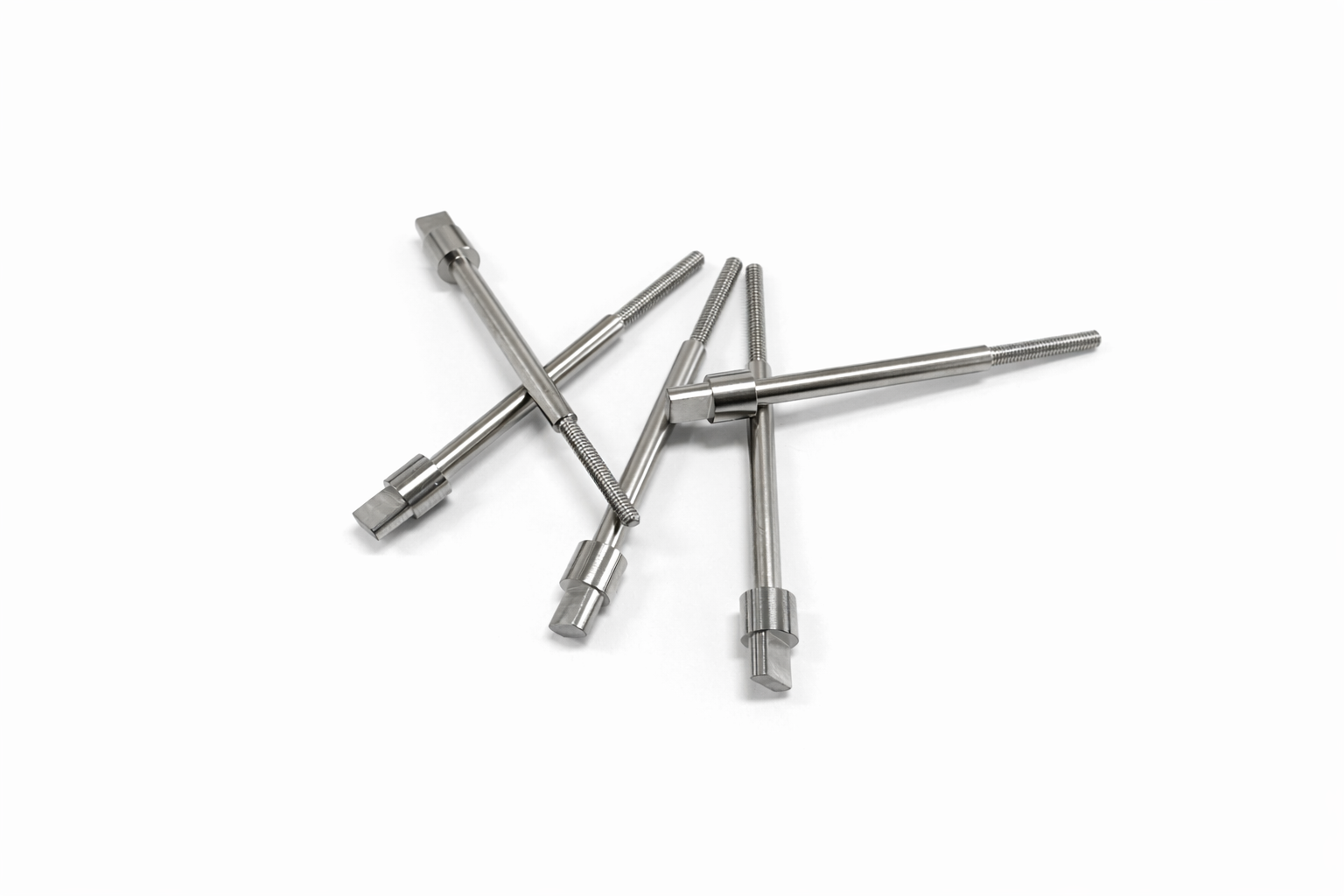
CNC MCT 정밀 부품
방산 CNC 부품의 신뢰성은 ‘정밀도’가 아니라 ‘재현성’입니다
방산 CNC 부품의 신뢰성은 가공 정밀도가 아니라 설계 의도의 정확한 재현에서 시작됩니다.
도면에 명시된 공차, 형상, 위치 관계는 단순한 수치가 아니라 기능적 요구사항입니다. 부품은 단품으로 존재하지 않고, 항상 조립체 내에서 하중을 받고, 진동을 겪고, 온도 변화를 경험합니다.
따라서 신뢰성 확보의 첫 단계는 기능 중심의 해석입니다.
기준면은 조립 기준과 일치해야 하며, 형상 공차는 실제 작동 환경에서의 변형을 고려해 설정되어야 합니다. 위치 공차는 단순히 “맞는다”가 아니라 “반복 재현된다”는 조건을 충족해야 합니다.
공차를 타이트하게 설정하는 것이 해답이 아닙니다.
공차가 공정 능력과 연결되고, 검사 체계와 연결될 때 비로소 기능적 의미를 갖습니다.
방산 CNC에서 설계-공정-검사가 하나의 언어로 통합되지 않으면, 단기 합격률은 유지되더라도 장기 신뢰성은 확보되지 않습니다.
동일 조건에서 반복 생산이 가능한가
환경 변화 속에서도 성능이 유지되는가
고장이 발생했을 때 원인을 역추적할 수 있는가
공정이 증빙 가능한 체계로 운영되는가
이 네 가지가 동시에 충족되어야 진정한 신뢰성이 확보됩니다.
신뢰성은 고장과의 상관관계
방산 장비에서 발생하는 고장은 현장에서 “파손”, “누설”, “진동 증가”, “접촉 불량” 같은 현상으로 나타납니다. 그러나 이를 줄이기 위해서는 고장을 물리적 원인과 공정 변수로 번역해야 합니다.
대표적인 고장 발생 메커니즘은 다음과 같습니다.
형상 및 위치 공차 편차 → 편하중, 체결 불균형, 공진 유발
표면 결함 → 접촉 피로, 마모, 씰 손상
잔류응력 → 피로 수명 분산 확대
세척 불량 및 오염 → 유압 스틱션, 베어링 이상
열처리 편차 → 강도 불균일, 취성 파괴
이러한 고장을 사전에 정의하고, 공정 단계에서 제거하거나 검출하도록 설계하는 것이 방산 신뢰성 관리의 핵심입니다.
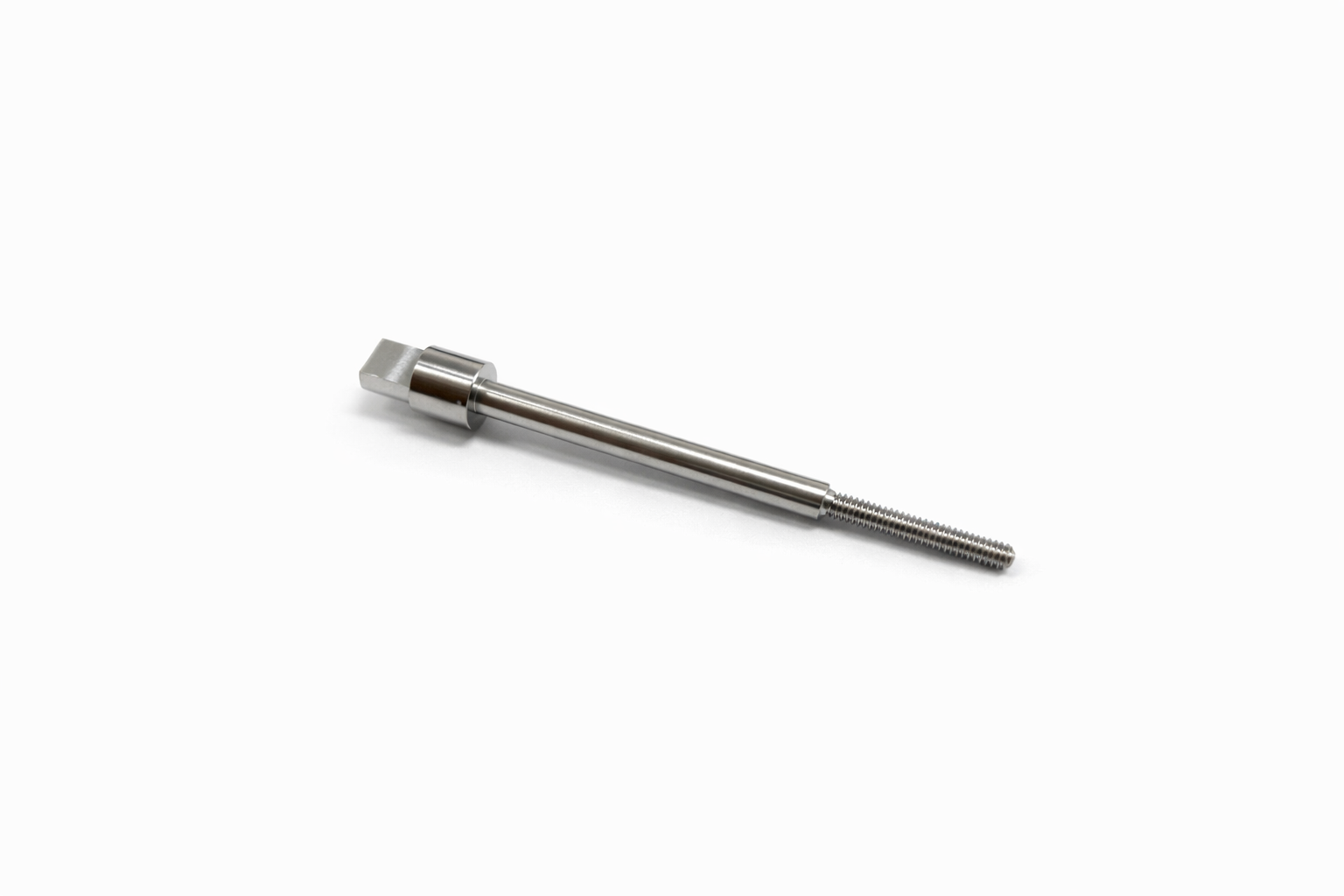
GD&T는 (기하학적 치수 공차) 기호언어 입니다.
방산 부품은 단품 기준이 아니라 조립 기준으로 기능이 정의됩니다. 이때 GD&T는 단순한 도면 기호가 아니라 기능적 관계를 강제하는 언어입니다.
중요한 것은 다음입니다.
기능 기준면과 실제 가공 기준면이 일치해야 합니다
측정 기준과 조립 기준이 동일해야 합니다
위치·동심·직각·프로파일 공차는 기능과 직접 연결되어야 합니다
공차를 무조건 타이트하게 설정하는 것은 해결책이 아닙니다.
공정 능력, 측정 능력, 검사 전략이 함께 설계될 때 공차는 의미를 가집니다.
재료와 열처리는 신뢰성의 절반 이상을 결정합니다
방산 환경은 극단적입니다. 고온과 저온, 충격, 지속 진동, 습기, 염수 환경 속에서 부품은 장시간 기능을 유지해야 합니다.
이 환경에서 고장은 대부분 가공 오차 자체가 아니라 “변동의 누적”에서 발생합니다.
잔류응력, 열처리 편차, 표면 결함, 미세 버, 세척 불량, 공구 마모, 설비 열 변위.
이 모든 요소가 개별적으로는 허용 범위 내에 있어도, 축적되면 피로 파단, 누설, 접촉 불량으로 이어집니다.
따라서 방산 CNC 신뢰성의 본질은 평균값 관리가 아니라 분산 관리입니다.
열처리와 표면처리는 단순 외주 공정이 아니라 구조적 관리 대상입니다.
특수 공정은 결과 검사만으로 완전히 검증할 수 없기 때문에, 공정 자체의 적합성을 증빙하는 체계가 필요합니다.
가공 조건, 로트 이력, 공구 수명, 검사 데이터가 단절 없이 연결될 때 변동은 관리 가능한 요소가 됩니다.
피로 균열 성장 특성
응력 부식 균열 가능성
갈바닉 부식
표면층 변질 및 탈탄
잔류응력 안정성
열처리 편차는 피로 수명 분산을 크게 증가시킵니다.
따라서 열처리, 표면처리, NDT 등 특수 공정은 단순 외주가 아니라 관리 대상 핵심 공정입니다.
열처리 로트 추적성, 공정 조건 기록, 경도 및 미세조직 검증이 반드시 연결되어야 합니다.
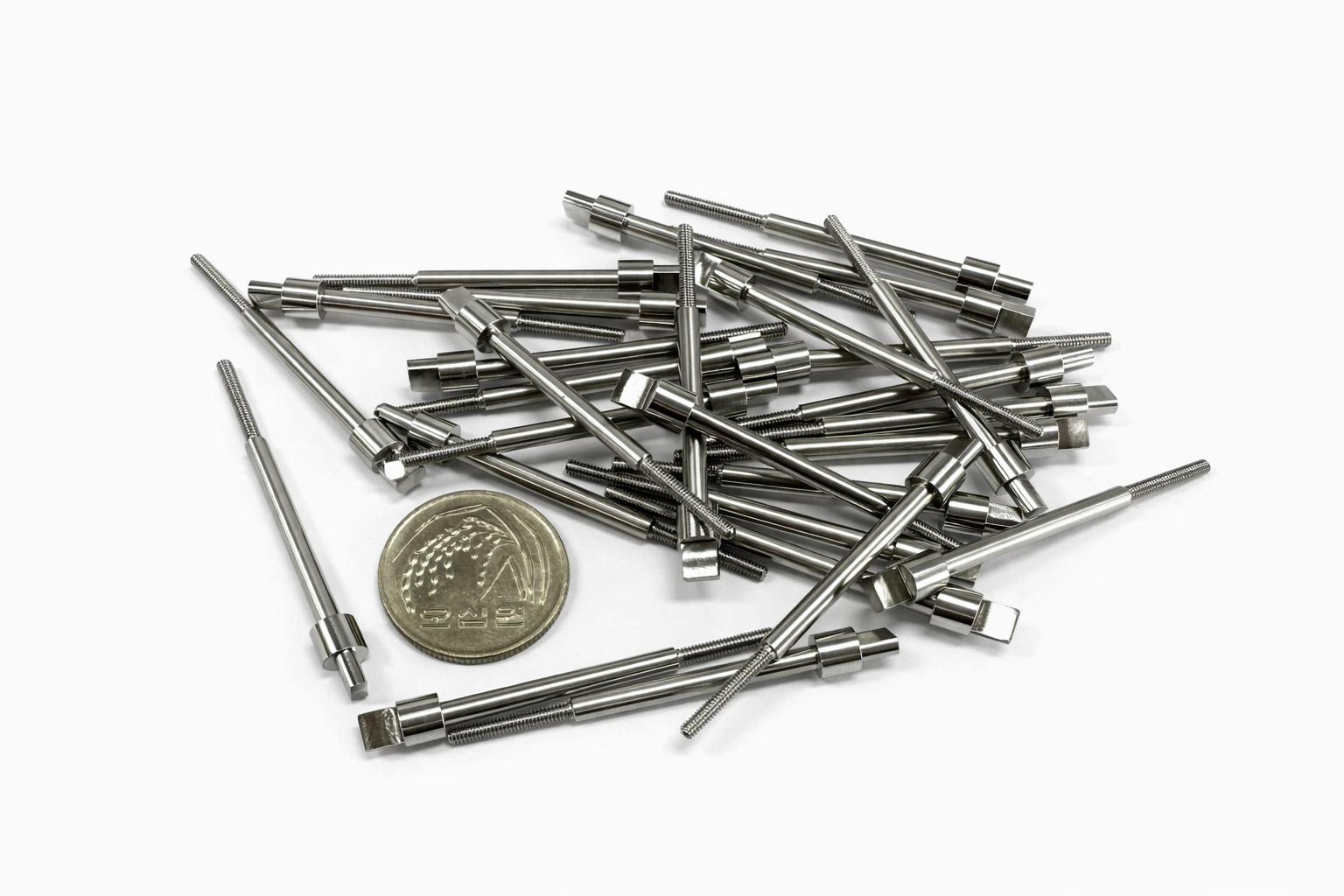
측정과 추적성의 체계가 곧 신뢰성입니다
방산 분야에서 “품질이 좋다”는 표현은 의미가 없습니다.
중요한 것은 “문제가 발생했을 때 원인을 추적하고 재발을 차단할 수 있는가”입니다.
CMM 검사, 비파괴검사, 접촉저항 측정, 누설 시험은 단순 판정 수단이 아닙니다.
이들은 공정 안정성을 감지하는 센서 역할을 해야 합니다.
측정 불확도가 공차 대비 충분히 낮아야 하며, 검사 기준은 조립 기준과 일치해야 합니다.
데이터는 단순 기록이 아니라 공정 개선의 입력값으로 사용되어야 합니다.
여기에 소재 로트, 열처리 로트, 표면처리 로트, 도면 리비전, 출하 이력이 연결되지 않으면, 방산 신뢰성 체계는 완성되지 않습니다.
| 기능 영역(대표 부품 예) | 주요 고장모드(현상) | 제조/공정 기인 원인(대표) | 예방(공정 설계) | 검출(검사/시험) | 신뢰성 관점의 핵심 지표(예시) |
|---|---|---|---|---|---|
| 구조 하우징(센서/제어기 하우징, 브래킷) | 균열, 변형, 체결부 풀림, 공진 증가 | 박벽 가공 중 클램핑 변형, 잔류응력, 공구 마모, 열처리 변동 | 가공 순서 최적화(거친가공→응력완화→정삭), 고정구 변형 최소화, 공구 수명 기준화 | CMM 형상/위치, 표면 결함 검사, 체결부 토크 관리 기록 | 형상 공차 Cpk, 변형량 트렌드, 잔류응력 관련 공정 조건 이력 |
| 씰링/유압 계통(밸브 바디, 매니폴드) | 누설, 스틱션, 유로 막힘 | 버 잔존, 표면 방향성 불량, 세척 불량(칩/오염), 코팅 결함 | 버 제로 공정(가공·디버링 표준화), 세척 청정도 기준, 표면 거칠기+방향성 관리 | 누설 시험(압력/시간), 내시경 검사, 청정도 검사(파티클) | 누설률 분포, 청정도 등급, 버 관련 불량률 및 재발율 |
| 정렬/가이드(슬라이드, 포지셔닝 면) | 비정상 마모, 소음/진동, 위치 오차 누적 | 기준면 불일치, 평면/직각 불량, 표면 손상(찍힘), 조립 오염 | 기준면 일치 설계(가공-검사-조립), 취급/포장 표준, 마찰면 표면상태 관리 | 기준면 기하공차, 조립 후 기능 측정(반복 위치), 표면 결함 검사 | 반복정밀도(R&R 포함), 마모율, 조립 후 기능합격률 |
| 고강도 부품(축/핀/링크) | 피로 파단, 프레팅, SCC | 열처리 편차, 표면 결함, 미세균열, 코팅/윤활 조건 불안정 | 특수 공정 관리(열처리·표면처리), 모서리 처리(노치 저감), 표면 품질 기준화 | 경도/미세조직, NDT(균열), 피로 관련 샘플링 시험 | 피로수명 분포, 열처리 로트 편차, NDT 검출 성능 기록 |
| 전기적 접지/차폐(케이스, 접지면) | 접촉 불량, EMI 문제, 부식 | 도금/피막 두께 편차, 접촉면 오염, 갈바닉 부식 | 재료 조합 검토, 접촉면 전처리/보호, 환경 방청 설계 | 접촉저항 측정, 염수/습기 관련 내환경 시험 | 접촉저항 분포, 부식 발생률, 환경시험 전후 변화량 |
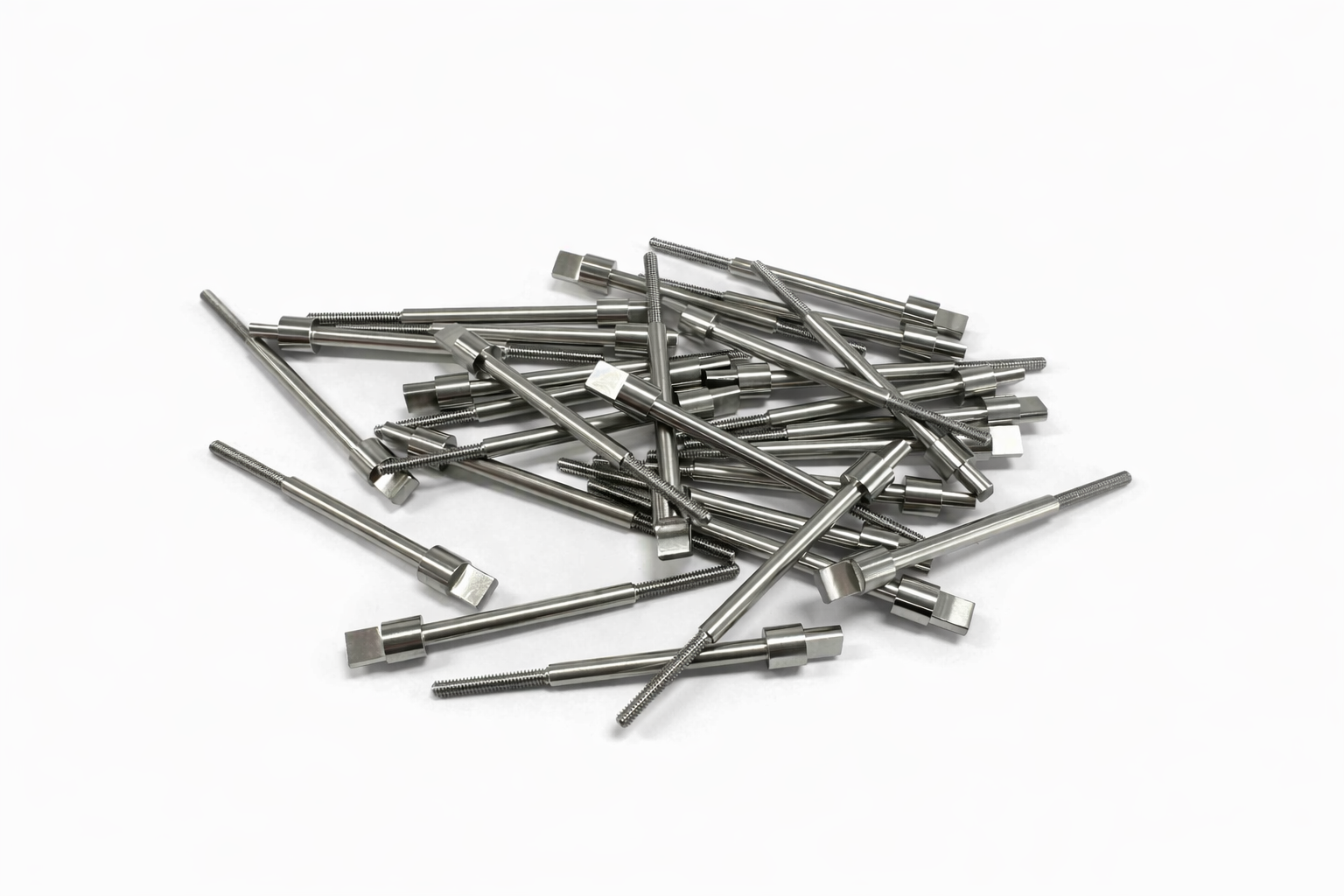
방산 CNC MCT 부품 신뢰성의 본질
방산 CNC MCT 부품의 신뢰성은 단순한 정밀가공 기술의 문제가 아닙니다.
설계 의도를 기능 중심으로 해석하고, 이를 공정 조건으로 정확히 변환하며, 그 결과를 데이터로 증명할 수 있는 구조를 갖추는 것이 본질입니다. 공차를 맞추는 능력은 기본 조건에 불과합니다. 중요한 것은 그 품질을 반복 재현할 수 있는가, 환경 변화 속에서도 성능이 유지되는가, 그리고 문제가 발생했을 때 원인까지 구조적으로 추적할 수 있는가입니다.
방산 분야에서는 평균 품질이 아니라 분산 통제가 경쟁력을 결정합니다. 가공 오차 자체보다 변동의 누적이 위험을 만들기 때문입니다. 따라서 신뢰성은 검사 강화로 확보되는 것이 아니라, 변동 원인을 상류에서 제거하는 공정 설계와 특수 공정 관리, 그리고 측정 불확도를 포함한 데이터 체계 위에서 확보됩니다.
결국 방산 CNC 부품의 신뢰성은 결과물이 아니라 운영 체계의 수준을 의미합니다. 정밀도는 전제 조건이며, 재현성은 자격 요건입니다. 설계, 공정, 검사, 추적성이 하나의 구조로 통합되어 있을 때 비로소 방산 공급망에서 요구하는 신뢰성 수준에 도달할 수 있습니다.
Defense CNC Component Quality and Reliability
CNC MCT Precision Components
Reliability in Defense CNC Components Is Not “Precision” but “Repeatability”
Reliability in defense CNC components does not begin with machining accuracy alone. It begins with the accurate reproduction of design intent.
Tolerances, geometries, and positional relationships defined on drawings are not mere numerical values. They represent functional requirements. A component never exists in isolation. It operates within an assembly, subjected to load transfer, vibration, and thermal variation.
The first step in securing reliability is therefore function-oriented interpretation.
Datums must align with assembly references. Geometric tolerances must reflect real deformation behavior under operating conditions. Positional tolerances must satisfy not only dimensional compliance, but consistent repeatability.
Tightening tolerances is not the solution.
A tolerance gains meaning only when it is linked to process capability and supported by a defined inspection strategy.
In defense CNC manufacturing, if design, process, and inspection are not unified under a common technical language, short-term acceptance rates may be achieved, but long-term reliability cannot be sustained.
True reliability requires simultaneous fulfillment of the following conditions:
Consistent repeat production under identical conditions
Performance stability under environmental variation
Root cause traceability in the event of failure
Process operation within a verifiable and auditable system
Only when these elements coexist can reliability be considered structurally secured.
Reliability and Its Correlation to Failure
Failures in defense equipment appear as fracture, leakage, vibration amplification, or electrical contact instability. Reducing such failures requires translating observed phenomena into physical mechanisms and process variables.
Typical failure mechanisms include:
Geometric and positional deviation leading to uneven load distribution, fastening imbalance, and resonance
Surface imperfections causing contact fatigue, wear, and seal degradation
Residual stress contributing to fatigue life dispersion
Contamination and inadequate cleaning resulting in hydraulic sticking or bearing malfunction
Heat treatment variation leading to non-uniform strength or brittle fracture
Defining these failure modes in advance and designing processes to prevent or detect them is the core principle of defense reliability management.
GD&T as a Functional Engineering Language
Defense components are defined by assembly-level functionality rather than standalone dimensional conformity. In this context, GD&T is not a drawing annotation system but an engineering language that enforces functional relationships.
Critical principles include:
Alignment between functional datums and machining datums
Consistency between measurement references and assembly references
Direct linkage between position, concentricity, perpendicularity, profile tolerances and functional performance
Over-constraining tolerances does not ensure reliability.
Tolerances become effective only when supported by measurable process capability and inspection performance.
Material and Heat Treatment Define Structural Reliability
Defense environments are severe. Components must endure extreme temperature fluctuations, impact loading, sustained vibration, humidity, and corrosive conditions.
In such environments, failures rarely originate from nominal dimensional error alone. They arise from accumulated variation.
Residual stress, heat treatment inconsistency, surface defects, micro burrs, inadequate cleaning, tool wear, and machine thermal drift may individually remain within specification. However, their combined effect results in fatigue fracture, leakage, or contact instability.
The essence of defense CNC reliability lies in variance control rather than average value control.
Heat treatment and surface treatment are not peripheral subcontract operations. They are structurally critical processes. Special processes cannot be fully validated through final inspection alone and therefore require procedural qualification and traceable control.
Machining parameters, lot history, tool life, and inspection records must be interconnected without interruption. Only then does variation become controllable rather than cumulative.
Critical metallurgical considerations include:
Fatigue crack propagation behavior
Stress corrosion cracking susceptibility
Galvanic corrosion interaction
Surface layer transformation and decarburization
Residual stress stabilization
Variation in heat treatment significantly increases fatigue life dispersion. Therefore, heat treatment, surface processing, and non-destructive testing must be treated as core controlled processes, supported by traceability, parameter recording, and verification of hardness and microstructure.
Measurement and Traceability as the Foundation of Reliability
In defense applications, the phrase “good quality” has no technical meaning. The decisive question is whether failures can be traced to root cause and structurally prevented from recurrence.
Coordinate measurement, non-destructive inspection, contact resistance measurement, and leak testing are not mere acceptance tools. They function as stability sensors within the manufacturing system.
Measurement uncertainty must remain sufficiently lower than tolerance limits. Inspection references must align with assembly references. Data must serve as input for process refinement rather than static documentation.
Material lot numbers, heat treatment lots, surface treatment records, drawing revisions, and shipment history must be structurally linked. Without this integration, a defense reliability framework remains incomplete.
Structural Reliability Framework in Defense CNC Components
| Functional Domain | Primary Failure Mode | Process-Origin Cause | Preventive Strategy | Detection Method | Reliability Indicator |
|---|---|---|---|---|---|
| Structural Housings (Sensor/Control Enclosures, Brackets) | Cracking, distortion, fastening loosening, resonance | Clamping deformation, residual stress, tool wear, heat treatment variation | Optimized machining sequence, stress relief integration, controlled tool life | CMM geometry verification, surface inspection, torque recording | Geometric Cpk, deformation trend, residual stress history |
| Sealing / Hydraulic Systems (Valve Bodies, Manifolds) | Leakage, sticking, flow obstruction | Burr presence, surface lay inconsistency, contamination, coating defects | Burr elimination process control, cleanliness standards, surface texture management | Leak testing, borescope inspection, particle cleanliness analysis | Leak rate distribution, contamination grade, recurrence rate |
| Alignment / Guide Surfaces | Abnormal wear, vibration, positional drift | Datum mismatch, flatness deviation, surface damage, assembly contamination | Unified datum strategy, handling standards, surface integrity control | Geometric tolerance inspection, functional repeatability testing | Repeatability metrics, wear rate, functional acceptance ratio |
| High-Strength Components (Shafts, Pins, Links) | Fatigue fracture, fretting, SCC | Heat treatment deviation, surface defect, micro-cracks, unstable coating | Special process control, edge refinement, surface quality standardization | Hardness/microstructure analysis, NDT, fatigue sampling | Fatigue life dispersion, heat treatment variance, NDT detection performance |
| Electrical Grounding / Shielding Surfaces | Contact instability, EMI issues, corrosion | Plating thickness variation, contamination, galvanic corrosion | Material compatibility analysis, surface preparation, corrosion protection design | Contact resistance testing, environmental corrosion exposure testing | Resistance distribution, corrosion occurrence rate |
The Structural Essence of Defense CNC MCT Component Reliability
Reliability in defense CNC MCT components is not merely a matter of precision machining capability.
It lies in the ability to interpret design intent through functional analysis, translate that intent into controlled process conditions, and substantiate outcomes with verifiable data structures. Achieving tolerance compliance is only a baseline condition. What ultimately defines reliability is repeatability, environmental resilience, and structural traceability.
In defense manufacturing, competitive strength is determined not by average quality levels but by dispersion control. Failure is driven not by isolated deviation but by accumulated variability.
Reliability is therefore not secured through intensified inspection alone. It is achieved through upstream elimination of variation sources, disciplined special process management, and a data architecture that incorporates measurement uncertainty and traceability.
Defense CNC reliability does not describe a finished product. It describes the maturity of the operational system that produces it. Precision is the prerequisite. Repeatability is the qualification. Only when design, process, inspection, and traceability are structurally integrated can a manufacturer meet the reliability standards demanded by defense supply chains.
추가 정보
방산 CNC 부품 품질과 신뢰성은 치수를 맞추는 수준을 넘어, 설계 의도를 반복 재현하는 제조 체계에서 성립합니다. 방산 CNC 부품 신뢰성은 공정 변동(열처리, 표면, 잔류응력, 오염, 공구 마모)을 구조적으로 통제하고, 측정과 추적성으로 근거를 남길 때 강화됩니다. 핵심은 정밀도 자체보다 재현성과 역추적 가능성의 결합입니다.
핵심 포인트
- 기준면(datums)과 조립 기준을 일치시켜 GD&T 해석이 공정과 검사까지 동일하게 이어지도록 구성합니다.
- 공차를 단순 축소하기보다 공정 능력과 측정 불확도를 포함한 관리 구조로 연결합니다.
- 방산 환경(진동, 충격, 온도 변화, 습기, 염수)에서 누적 변동이 고장으로 이어지는 경로를 사전에 정의합니다.
- 잔류응력, 열처리 편차, 표면 결함, 미세 버, 세척 불량은 개별 허용 범위 내여도 합성 효과로 신뢰성을 저하시킬 수 있습니다.
- CMM, NDT, 접촉저항, 누설 시험은 합격 판정보다 공정 안정성을 감지하는 센서로 활용합니다.
- 소재 로트, 열처리 로트, 표면처리 로트, 도면 리비전, 출하 이력을 부품 ID에 연결해 역추적성을 유지합니다.
- 특수 공정(열처리, 표면처리, NDT)은 결과 검사만으로 검증이 제한되므로 공정 적합성 증빙 체계를 전제로 합니다.
FAQ
방산 CNC 부품에서 “재현성”이 중요한 이유는 무엇입니까?
방산 부품은 동일한 기능을 장기간 반복 수행해야 하며, 환경 변화가 큰 조건에서도 성능 편차가 작아야 합니다. 따라서 단발성 치수 합격보다 공정 변동을 통제해 반복 생산 결과가 일정하게 유지되는지가 핵심 기준이 됩니다.
공차를 더 타이트하게 주면 신뢰성이 자동으로 올라갑니까?
공차 축소는 조립 간극이나 위치 편차를 줄이는 데 도움이 될 수 있으나, 공정 능력과 측정 불확도가 따라오지 않으면 오히려 분산이 커지고 재작업이 증가할 수 있습니다. 공차는 공정 설계와 검사 전략이 함께 설계될 때 신뢰성에 실질적으로 기여합니다.
GD&T는 방산 부품 품질에 어떤 영향을 줍니까?
GD&T는 단품 치수의 합격 여부보다 조립 기준에서 기능이 유지되도록 기준면과 형상·위치 관계를 규정하는 언어입니다. 가공 기준, 측정 기준, 조립 기준이 일치하도록 운영되면 불량의 유형이 줄고 재현성이 강화됩니다.
열처리 편차가 신뢰성에 미치는 영향은 무엇입니까?
열처리 편차는 경도, 미세조직, 잔류응력 상태를 변화시켜 피로 수명 분산을 확대시키는 요인이 됩니다. 방산에서는 평균 강도보다 분산이 문제를 만들기 때문에, 열처리 조건과 로트 이력의 연결이 중요합니다.
표면 결함이나 미세 버가 왜 문제가 됩니까?
표면 결함과 버는 접촉 피로, 마모, 씰 손상을 유발할 수 있고, 유압/유로 계통에서는 미세 오염원으로 작동할 수 있습니다. 특히 반복 진동 환경에서는 프레팅과 마모가 누적되기 쉬워 표면 품질 관리가 신뢰성의 핵심이 됩니다.
세척과 오염 관리는 방산 CNC에서 어느 정도로 중요합니까?
세척 불량과 파티클 오염은 밸브 스틱션, 베어링 이상, 접촉저항 변동과 같은 문제로 이어질 수 있습니다. 청정도는 가공 품질과 별개로 고장률에 영향을 주므로, 공정 단계별 청정 기준과 검사 기준을 분리해 관리하는 것이 유리합니다.
측정 불확도는 어떻게 신뢰성과 연결됩니까?
측정 불확도가 공차에 근접하면 합격/불합격 판정의 변동이 증가하고, 공정 드리프트를 조기에 감지하기 어렵습니다. 신뢰성 중심의 검사 체계는 “측정 가능성”과 “검출력”을 포함해 공정 안정성을 보조하는 방향으로 설계됩니다.
추적성은 왜 기술적 요구사항으로 봐야 합니까?
고장이 발생했을 때 원인을 특정 로트와 공정 조건까지 좁혀야 재발을 차단할 수 있습니다. 소재, 열처리, 표면처리, 검사 데이터가 단절되면 개선이 반복되지 못하고 동일 문제가 재발할 가능성이 커집니다.
방산 CNC 부품의 신뢰성 관리에서 가장 흔한 실수는 무엇입니까?
공차를 줄이고 검사 항목을 늘리는 방식만으로 신뢰성을 확보하려는 접근이 흔합니다. 변동 원인을 상류에서 줄이고, 기준면·공정·측정·데이터를 하나의 구조로 묶는 설계가 함께 진행되어야 안정적인 개선이 가능합니다.
관련 주제 확장
재현성 중심 품질 체계의 구성
방산 CNC 부품 품질과 신뢰성은 평균값이 아니라 분산을 낮추는 체계에서 강화됩니다. 공구 수명, 설비 열상태, 고정구 변형, 소재 로트 편차가 품질에 미치는 영향을 공정 데이터로 연결하는 방식이 유효합니다. 검사 데이터는 판정 기록이 아니라 드리프트 감지와 원인 규명에 활용되는 형태가 바람직합니다.
특수 공정과 신뢰성의 연결
열처리, 표면처리, 비파괴검사는 결과 검사만으로 완전 검증이 제한되는 공정입니다. 방산에서는 공정 조건의 기록, 로트 추적, 기준 절차의 유지가 신뢰성의 핵심 근거가 됩니다. 특히 피로 파단, SCC, 프레팅과 같은 장기 고장 메커니즘은 특수 공정 변동에 민감하게 반응할 수 있습니다.
측정 기준면과 조립 기준면의 일치
GD&T의 핵심 가치는 조립 기능을 기준으로 공차를 해석하게 만든다는 점에 있습니다. 실제 현장에서는 가공 기준, 측정 기준, 조립 기준이 어긋나면서 “검사는 합격인데 조립이 불안정한” 문제가 발생할 수 있습니다. 기준면 전략을 통합하면 품질 변동의 유형 자체가 줄어드는 효과가 나타날 수 있습니다.
고장모드 기반 공정 설계
파손, 누설, 진동 증가, 접촉 불량 같은 현상은 고장모드 관점에서 원인-대책-검출로 연결되어야 합니다. 형상/위치 편차, 표면 결함, 잔류응력, 오염, 열처리 편차는 방산 CNC에서 반복적으로 관찰되는 핵심 축입니다. 고장모드를 공정 변수로 번역해 관리하면 단기 합격률뿐 아니라 장기 신뢰성까지 안정화할 수 있습니다.
내부 링크
관련 기술 글은 ID METAL 인사이트에서 함께 확인할 수 있습니다. 방산 적용 관점에서 전기적 접촉 안정성이 필요한 경우 전기접점 콘텐츠가 참고가 될 수 있으며, 가공 관점의 상세 내용은 CNC 정밀가공부품 페이지와 연결됩니다.
체결과 구조적 결합이 중요한 부품은 구조연결용 부품 항목에서 확장해 볼 수 있습니다. 대량 정밀 성형 관점은 정밀프레스가공 부품과 함께 보면 공정 선택의 기준이 정리됩니다. 시스템 단에서 신호/전원 연결이 포함되는 경우 케이블와이어 하네스도 연계해서 확인하는 흐름이 자연스럽습니다.
열·전기적 접합과 소재 관점에서 공정 변동을 줄이는 접근은 브레이징 및 금속접합소재에서 함께 살펴볼 수 있습니다.