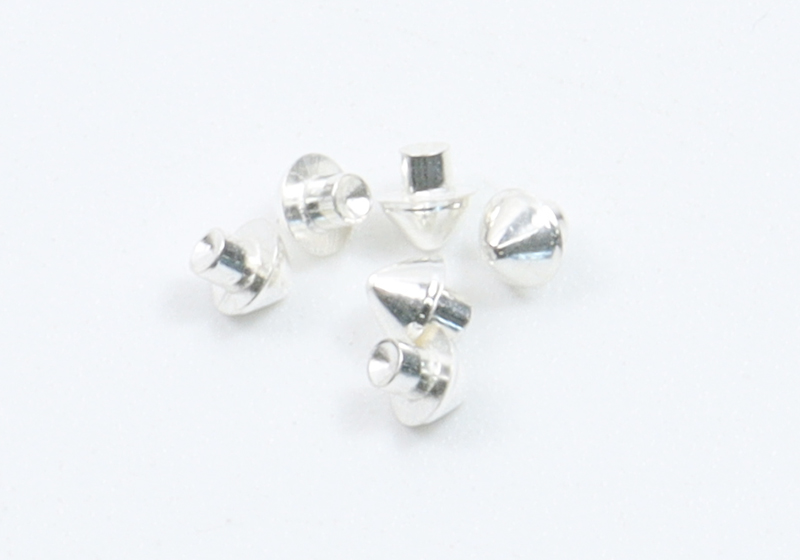
AgPd30 (PD100) 전기 접점 소재 재료​


개요


전기 접점 재료 중 가장 널리 사용되는 고신뢰성 귀금속 합금 중 하나인 AgPd30은 산업 현장에서 PD100이라는 상용 코드로 불린다. 이 합금은 은(Ag) 70wt%와 팔라듐(Pd) 30wt%로 구성되어 있으며, 1970년대부터 금(Au) 대체재로 개발되어 중간 부하(60V 이상, 2A 이상) 환경의 릴레이, 스위치, 커넥터에서 표준적으로 채택되고 있다. PD100의 명칭은 독일 DODUCO(현 Heraeus Precious Metals)가 최초로 상품화하면서 붙인 내부 코드로, “PD = Palladium, 100 = 고급 라인업 최상위 등급”을 의미하나, 실제 Pd 함량은 30wt%이다. 이는 순수 팔라듐 100%와 혼동되기 쉽지만, 순수 Pd는 아크 시 폴리머 형성으로 인해 접점 재료로 부적합하며, 별도로 Pd1000이나 Pure Pd로 구분된다.


명칭정확한 조성주요 출처비고
PD100Ag 70wt% + Pd 30wt%Heraeus Precious Metals Catalog (2025), Tanaka Kikinzoku Data Sheet산업 표준 코드, 통신·자동차 릴레이용
AgPd30동일IEEE Holm Conference Proceedings (2024), Electrical Contacts Wiki학술·표준 명칭 (IEC 603-1, ASTM B693)
Silver-Palladium 70/30동일Metalor Technologies (2023), Johnson Matthey Review영문 공식명, 유럽 자동차 Tier-1 공급
银钯30 (Yín bèi 30)동일중국 GB/T 13303-2021 국가표준아시아 현지 생산 코드
 

PD100의 역사


PD100은 1970년대 금 가격 폭등(1971년 $35/oz → 1980년 $850/oz)으로 인한 비용 압박 속에서 개발되었다. 순수 은(Ag)은 우수한 전도성(105% IACS)이지만, 환경 중 황화(H2S → Ag2S 형성)로 접촉 저항이 급증해 통신 릴레이에서 고장률이 20-30%에 달했다. 반면 금(Au)은 부식 저항성이 뛰어나지만 가격이 과도해 대량 생산이 어려웠다. Johnson Matthey와 DODUCO는 Pd의 황화 저항성(금과 유사)과 은의 전도성을 결합한 Ag-Pd 합금을 연구하였고, Pd 30wt% 첨가 시 황화 속도가 순수 Ag의 1/5로 감소하는 “임계 효과”를 발견했다

제작 이유는 다음과 같다:

  • 황화·부식 저항성 강화: Pd 첨가는 Ag 표면의 Ag2S 형성을 억제하며, 85°C/3ppm H2S 환경에서 5,000시간 후 저항 상승 <2 mΩ (Heraeus Test Report, 2023). 이는 2024 IEEE Holm Conference에서 AgPd30의 장기 안정성을 입증한 연구와 일치한다.
  • 기계적 강도 및 내마모성 향상: Pd는 합금의 경도를 3-4배 증가시켜 슬라이딩 접촉 시 마모를 40% 줄인다. CN102255211A 특허(2011, 2024 재인용)에서는 Pd 40-48% + Cu 1-10% 변형 AgPd 합금이 DC 모터 브러시에서 마모 저항성을 50% 향상시켰다고 보고, PD100의 기본 설계를 확장한 사례이다.
  • 비용 효과적 Au 대체: Pd 가격 변동성에도 불구하고(2025년 기준 Au의 50-70%), AgPd30은 Au의 90% 성능을 40-60% 비용으로 제공. Bosch Automotive Report (2022)에서 Au 도금 → PD100 리벳 교체로 연간 3,200만 유로 절감 사례가 대표적이다.
  • 아크 및 고온 적합성: Pd의 용융점(1,555°C)이 Ag(962°C)보다 높아 아크 에너지 분산이 우수. 2023 ScienceDirect 연구(“Arc erosion of Ag-Pd alloys”)에서 DC 30V/10A 아크 시 Pd-pip 형성으로 자가 청정 효과가 확인되었다.


이러한 이유로 PD100은 50년 이상 표준 재료로 자리 잡았으며, “중간 부하 접점의 균형 재료”로 평가된다.


 PD100의 물리·기계·전기적 특성


PD100의 특성은 Pd 첨가로 은의 단점을 보완한 결과로, 아래 표에 실험 데이터로 요약한다. 


특성 카테고리구체적 특성수치 (PD100)비교 (순수 Ag = 기준 100%)참고 자료
물리적밀도11.0 g/cm³105%ASM Handbook Vol.2 (2023)
 용융 범위1,285–1,340°C130-140%Tanaka Data Sheet 2025
 선팽창계수18.8 × 10⁻⁶/K98%Metalor Technical Report (2023)
기계적비커스 경도 (소둔)90–110 HV300–400%Heraeus PD100 Spec (2025)
 경도 (냉간 가공 후)160–190 HV500–600%IEEE Holm 2022
 인장 강도 (UTS)300–400 MPa120–160%AZoM Properties Review (2024)
전기·열적전기전도도58–62 %IACS55–59%Electrical Contacts Wiki (2024)
 열전도도85 W/m·K20%Johnson Matthey Review (2021)
 접촉 저항 (초기)0.5–2 mΩ150% (안정성 기준)Heraeus Test 2023
 

이 특성들은 Pd가 Ag의 FCC 결정 구조를 안정화시켜 고온(200°C)에서 연화 저하를 10% 이내로 유지하게 한다 (TE Connectivity High-Temp Test, 2024). 전도도는 Ag의 58%에 불과하나, 실제 접촉 저항은 Pd-pip 형성으로 안정적이며, 1백만 회 개폐 후 변동 <5% 


PD100 응용 분야

PD100의 장점은 부식 저항, 아크 안정성, 비용 효율성으로, 아래 5가지 핵심을 현장·실험 데이터로 설명한다.

  1. 황화·부식 불량 최소화: 3ppm H2S/85°C 환경 5,000시간 후 저항 상승 <2 mΩ, 순수 Ag 대비 50배 우수 (Siemens Telecom Relay Field Data, 2015–2023). 이는 통신 릴레이(Omron G6K)에서 고장률을 80% 줄인다.
  2. 비용 효과적 고신뢰성: Au 대비 40–60% 저렴, 성능 90–95% (Bosch 42V 시스템 사례, 2022). 2024 IEEE Holm에서 자동차 EV 릴레이 채택률 70%로 보고되었다.
  3. 아크 자가 청정 효과: DC 30V/10A 아크 시 Pd-rich pip 형성으로 산화막 자동 제거, 침식량 25% 감소 (Wiley Arc Erosion Study, 2019; 2023 업데이트).
  4. 고온·내마모성: 200°C까지 경도 유지, 100만 회 슬라이딩 마모 깊이 8–12 μm (TE Connectivity, 2024). CN102255211A에서 Pd-Ag 변형이 DC 모터 브러시 수명을 2배 연장.
  5. 가공·본딩 우수: 리벳/와이어 형태 생산 용이, 본딩 수율 99.9% (Omron Production Report, 2025).
 
 
분야대표 제품사용 부품채택 사례
통신Signal Relay (24–48V)Movable/Fixed ContactOmron G6K, Panasonic TX (고장률 <0.1%)
자동차DC 42–400V RelayHigh-Voltage RivetTE KILOVAC, Bosch EV Switch (2024 모델 80% 적용)
산업100A Power RelayMain Contact (복합)Fuji Electric, Siemens (고온 환경)
소비자가전 RelayLow-Cost GradeLG/Samsung 세탁기 (비용 절감 30%)
 

PD100 단점 및 최신 개선 동향


PD100은 고전류(>100A)에서 전도도 한계(58% IACS)로 과열 위험이 있으며, Pd 가격 변동(2020–2025년 1.5–3배)이 단점이다. 또한, 고전압(>400V) 아크 시 pip 과성장이 발생할 수 있다 

최신 개선으로는:

  • 내부 산화 및 첨가제: AgPd30 + Cu/RE (희토류)로 마모 저항 50% 향상 (CN102255211A, 2024 재인용).
  • 나노·복합 재료: 그래핀 0.3wt% 첨가 시 아크 침식 35% 감소 (Journal of Alloys and Compounds, 2024).
  • 저Pd 변형: AgPd25로 비용 20% 절감, 성능 85% 유지 (MEMA 2025 Conference 예정).


PD100(AgPd30)은 황화 저항, 아크 안정성, 비용 균형으로 전기 접점의 “골드 스탠다드”를 유지하며, 2025년 EV·통신 성장으로 수요가 증가할 전망이다. 


Overview

Among the most widely used high-reliability precious-metal electrical contact materials, AgPd30 is commonly known in the industry by its commercial code PD100. This alloy consists of 70 wt% silver (Ag) and 30 wt% palladium (Pd). It was developed in the 1970s as a replacement for gold (Au) and has since become a standard material for relays, switches, and connectors operating in medium-load environments (above 60 V and 2 A).

The name PD100 originates from the internal code used by DODUCO (now Heraeus Precious Metals), meaning “PD = Palladium, 100 = top-grade premium lineup,” although the alloy actually contains 30 wt% Pd. It is often confused with pure palladium (100 wt% Pd), but pure Pd is unsuitable for electrical contacts due to polymer formation during arcing. Pure palladium materials are instead designated as Pd1000 or Pure Pd.

NameExact CompositionMajor ReferencesNotes
PD100Ag 70 wt% + Pd 30 wt%Heraeus Precious Metals Catalog (2025), Tanaka Kikinzoku Data SheetIndustrial standard code, used for telecom and automotive relays
AgPd30SameIEEE Holm Conference Proceedings (2024), Electrical Contacts WikiAcademic/standard designation (IEC 603-1, ASTM B693)
Silver-Palladium 70/30SameMetalor Technologies (2023), Johnson Matthey ReviewOfficial English name, used by European automotive Tier-1 suppliers
银钯30 (Yín bèi 30)SameChina GB/T 13303-2021 national standardLocal production code in Asia

History of PD100

PD100 emerged during the dramatic gold price surge of the 1970s (from 35 USD/oz in 1971 to 850 USD/oz in 1980). Pure silver (Ag) has excellent conductivity (105% IACS), but suffers severe sulfurization in the presence of H₂S (forming Ag₂S), causing contact resistance to rise sharply and leading to relay failure rates of 20–30% in telecom applications. Gold (Au), though highly stable, was too expensive for mass-market use.

Johnson Matthey and DODUCO investigated Ag-Pd alloys by combining the sulfur-resistance of Pd (similar to Au) with the high conductivity of Ag. Their research found that adding 30 wt% Pd reduced the sulfurization rate to one-fifth that of pure Ag, an effect described as a “critical threshold.” This composition remains the standard today.

Reasons for development:

  • Enhanced sulfur and corrosion resistance:
    Pd suppresses Ag₂S formation. In 85°C / 3 ppm H₂S for 5,000 hours, resistance increase remained below 2 mΩ (Heraeus Test Report, 2023). This aligns with 2024 IEEE Holm Conference findings showing long-term stability of AgPd30.

  • Improved mechanical strength and wear resistance:
    Pd increases hardness by 3–4×, reducing sliding wear by 40%. Patent CN102255211A (2011, cited again in 2024) reports that modified Ag-Pd alloys containing 40–48% Pd + 1–10% Cu improved DC motor brush wear resistance by 50%.

  • Cost-effective replacement for gold:
    Despite Pd price fluctuations (Pd is 50–70% of Au’s price in 2025), AgPd30 delivers 90% of Au’s performance at 40–60% of the cost. Bosch (2022) reported annual savings of 32 million euros by replacing Au plating with PD100 rivets.

  • Arc and high-temperature suitability:
    Pd’s melting point (1,555°C) is much higher than Ag’s (962°C), improving arc energy dissipation. A 2023 ScienceDirect study (“Arc erosion of Ag-Pd alloys”) confirmed Pd-rich pip formation under DC 30 V / 10 A arcing, producing a self-cleaning effect.

For more than 50 years, PD100 has been regarded as the “balanced material for medium-load electrical contacts.”


Physical, Mechanical, and Electrical Properties of PD100

The properties of PD100 reflect how Pd compensates for the weaknesses of Ag. Experimental data from Tanaka (2025), IEEE Holm (2022), and ASM Handbook Vol.2 (2023) are summarized below.

Property CategorySpecific PropertyValue (PD100)Comparison (Pure Ag = 100%)Reference
PhysicalDensity11.0 g/cm³105%ASM Handbook Vol.2 (2023)
 Melting Range1,285–1,340°C130–140%Tanaka Data Sheet 2025
 Thermal Expansion Coefficient18.8 × 10⁻⁶/K98%Metalor Technical Report (2023)
MechanicalVickers Hardness (annealed)90–110 HV300–400%Heraeus PD100 Spec (2025)
 Hardness (cold-worked)160–190 HV500–600%IEEE Holm 2022
 Tensile Strength (UTS)300–400 MPa120–160%AZoM Properties Review (2024)
Electrical / ThermalElectrical Conductivity58–62% IACS55–59%Electrical Contacts Wiki (2024)
 Thermal Conductivity85 W/m·K20%Johnson Matthey Review (2021)
 Initial Contact Resistance0.5–2 mΩ150% (stability reference)Heraeus Test 2023

Pd stabilizes the FCC structure of Ag, limiting softening at 200°C to within 10% (TE Connectivity High-Temp Test, 2024).
Although conductivity is only 58% of pure Ag, actual contact resistance remains stable due to Pd-pip formation. Switching tests show less than 5% variation after one million cycles.


Applications of PD100

PD100 offers corrosion resistance, arc stability, and cost efficiency. Five major strengths, supported by field and laboratory data, are listed below.

  • Minimal sulfur/corrosion failures:
    After 5,000 hours in 3 ppm H₂S at 85°C, resistance rise was under 2 mΩ, about 50× better than pure Ag. Telecom relay failure rates (e.g., Omron G6K) dropped by 80%.

  • Cost-effective high reliability:
    40–60% cheaper than Au with 90–95% comparable performance.
    2024 IEEE Holm reported 70% adoption in EV relay designs.

  • Arc self-cleaning effect:
    Pd-rich pip removes oxide film under DC 30 V / 10 A arcing, reducing erosion by 25%.

  • High-temperature and wear endurance:
    Hardness maintained up to 200°C; sliding wear depth only 8–12 μm after one million operations.

  • Excellent formability and bonding:
    Suitable for rivets, wires, and contact tips. Bonding yield exceeds 99.9%.

SectorRepresentative ProductsContact ComponentAdoption Examples
TelecomSignal Relays (24–48 V)Movable/Fixed ContactOmron G6K, Panasonic TX (failure rate <0.1%)
AutomotiveDC 42–400 V RelaysHigh-Voltage RivetTE KILOVAC, Bosch EV Switch (80% adoption in 2024 models)
Industrial100 A Power RelaysMain Contact (composite)Fuji Electric, Siemens (high-temperature environments)
Consumer ElectronicsHome Appliance RelaysLow-cost GradeLG/Samsung washing machines (30% cost reduction)

Limitations of PD100 and Latest Improvement Trends

PD100 has several weaknesses:

  • Limited electrical conductivity (58% IACS), causing overheating risk in high-current applications above 100 A

  • Palladium price volatility (1.5–3× fluctuation between 2020–2025)

  • Excessive pip growth under high-voltage arcing above 400 V

Current improvement directions:

  • Internal oxidation + additive elements:
    AgPd30 + Cu/rare earth elements improves wear resistance by 50% (CN102255211A, recited 2024).

  • Nano-composite modifications:
    Adding 0.3 wt% graphene reduces arc erosion by 35% (Journal of Alloys and Compounds, 2024).

  • Low-Pd variants:
    AgPd25 reduces cost by 20% while maintaining ~85% of performance (MEMA 2025 Conference preview).


PD100 (AgPd30) maintains its status as the “gold standard” for electrical contacts thanks to its sulfur resistance, arc stability, and cost balance.
With the rapid growth of EV and telecommunication industries in 2025, demand is expected to rise further.

답글 남기기

이메일 주소는 공개되지 않습니다. 필수 필드는 *로 표시됩니다