
항공 우주 CNC 정밀 가공 부품
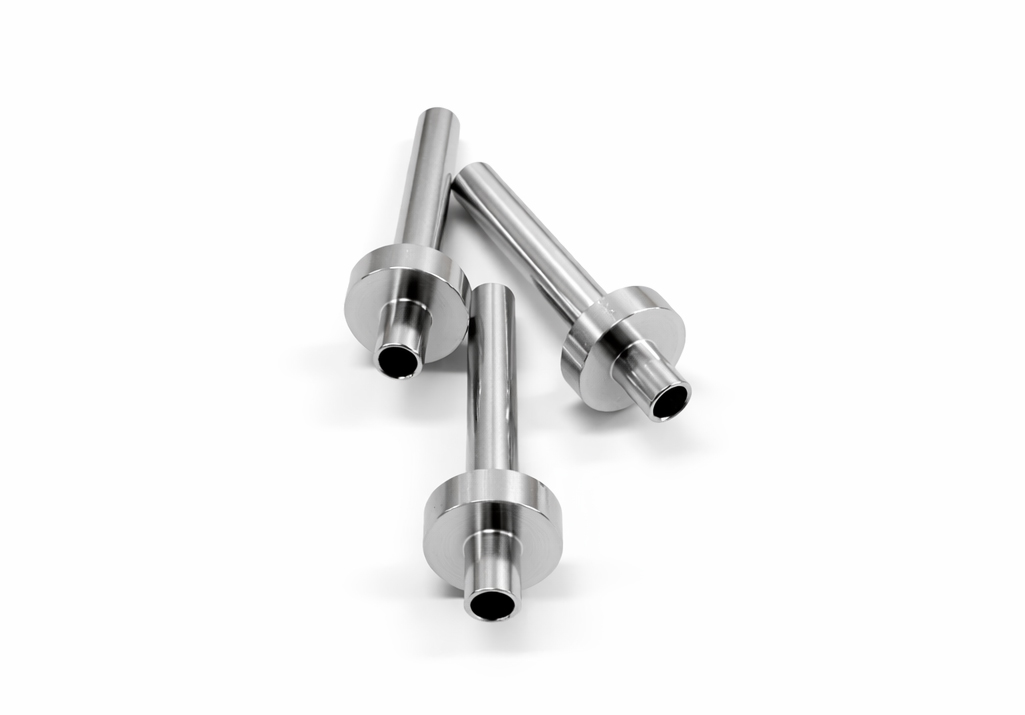
항공 우주 산업에서 CNC 정밀 가공 부품이 갖는 의미
항공·우주 산업은 모든 제조 산업 중에서도 가장 엄격한 품질 기준과 공정 신뢰성을 요구하는 분야로 분류됩니다. 비행 중 발생하는 극한의 온도 변화, 고속 진동, 반복 피로 하중, 그리고 미세한 구조적 변형까지 고려해야 하는 환경에서, 단 하나의 부품 오차가 전체 시스템의 안전성과 직결될 수 있기 때문입니다.
이러한 이유로 항공·우주 부품은 단순히 ‘정밀하게 가공된 금속 부품’이 아니라, 설계 단계부터 소재 선택, 공정 설계, 가공 오차 관리, 품질 검증까지 모든 과정이 유기적으로 연결된 고신뢰성 엔지니어링 결과물로 취급됩니다. CNC 정밀 가공 기술은 이러한 요구를 충족시키기 위한 핵심 제조 기술로 자리 잡고 있습니다.
항공 우주 부품에서 요구되는 정밀도의 본질
절대 치수 오차와 반복 정밀도
항공·우주용 부품은 단품 정밀도뿐 아니라 양산 시에도 동일한 품질을 유지해야 합니다. 수 마이크로미터(μm) 단위의 오차 허용 범위 내에서 동일 형상을 반복 재현하는 능력은 CNC 장비 성능뿐 아니라 가공 조건 설정, 공정 안정성, 장비 보정 주기까지 포함한 종합 기술력의 결과입니다.
형상 정밀도와 동심도·직진도
핀, 샤프트, 슬리브 계열 부품의 경우 단순 원통 형상처럼 보이지만, 실제로는 동심도, 원통도, 직진도 오차가 항공 시스템의 마찰, 누설, 진동 특성에 직접적인 영향을 미칩니다. 미세한 축 편심은 고속 회전 환경에서 피로 파손의 원인이 될 수 있습니다.
표면 조도와 미세 결함 관리
항공·우주 부품의 표면은 단순 외관 문제가 아니라 기능적 요소입니다. Ra 수치로 관리되는 표면 조도는 마찰 계수, 내마모성, 피로 수명에 영향을 주며, 미세 스크래치나 버(Burr)는 균열의 시작점이 될 수 있습니다.
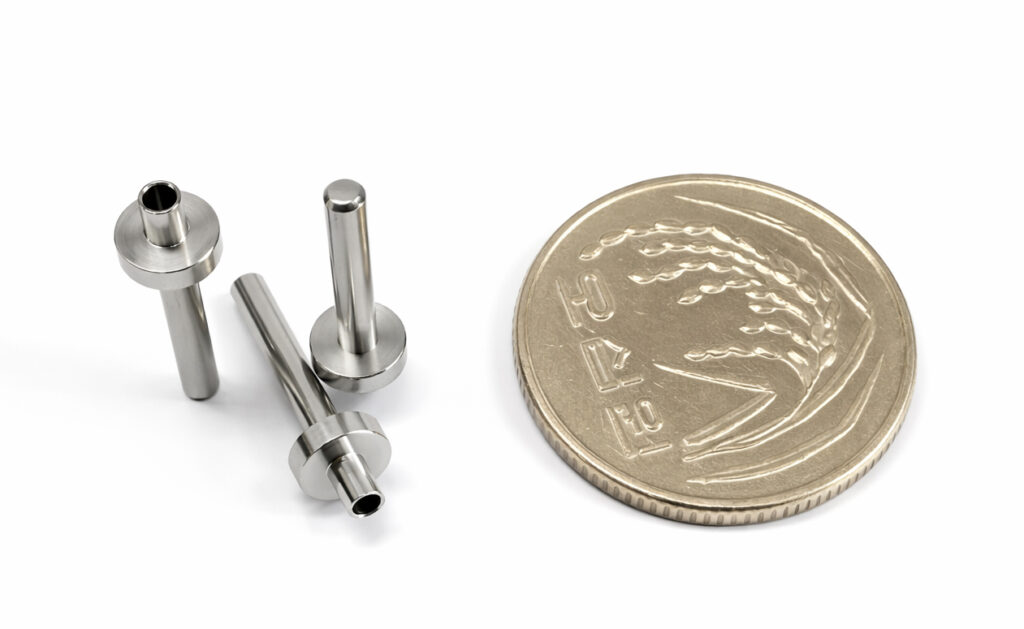
CNC 정밀 가공에서 가장 중요하게 고려되는 공정 요소
소재 특성 기반 공정 설계
항공·우주 산업에서 사용되는 소재는 스테인리스강, 티타늄 합금, 니켈 기반 초내열 합금 등 고강도·고내열 재료가 대부분입니다. 이러한 소재는 절삭 저항이 크고 공구 마모가 빠르기 때문에, 절삭 조건 설정과 공구 선택이 정밀도 유지의 핵심 요소가 됩니다.열 변형과 잔류 응력 제어
가공 중 발생하는 국부적인 열은 부품 변형의 주요 원인입니다. 특히 길이가 있는 핀이나 샤프트 계열 부품은 열 팽창으로 인해 가공 종료 후 치수가 변하는 경우가 발생할 수 있습니다. 이를 방지하기 위해 가공 순서 최적화, 다단 가공, 냉각 전략 설계가 필수적입니다.공정 간 기준면 일관성 유지
항공·우주 부품은 단일 공정이 아닌 여러 가공 단계를 거쳐 완성됩니다. 이때 기준면(reference datum)이 공정마다 미세하게 달라지면 누적 오차가 발생합니다. CNC 정밀 가공에서는 기준면 설정과 유지가 설계만큼이나 중요한 기술 요소입니다.
| 관리 항목 | 일반 산업용 CNC 부품 | 항공·우주 CNC 부품 |
|---|---|---|
| 치수 공차 | ±0.01~0.05 mm 수준 | ±0.002~0.005 mm 수준 |
| 반복 정밀도 | 공정별 편차 허용 | 전 공정 반복 재현 필수 |
| 표면 조도 | 외관 및 기능 중심 | 피로 수명·마찰 특성 고려 |
| 공정 이력 관리 | 선택 사항 | 전 공정 추적 관리 |
| 신뢰성 검증 | 샘플 기반 | 로트 단위·장기 데이터 기반 |
항공·우주 부품 제조에서 가장 중요한 핵심은 ‘오차를 없애는 것’이 아니라, 오차를 예측하고 통제하는 능력입니다. 완벽한 무오차 가공은 현실적으로 존재하지 않지만, 오차의 방향성과 범위를 정확히 관리할 수 있다면 시스템 전체의 안정성을 확보할 수 있습니다.
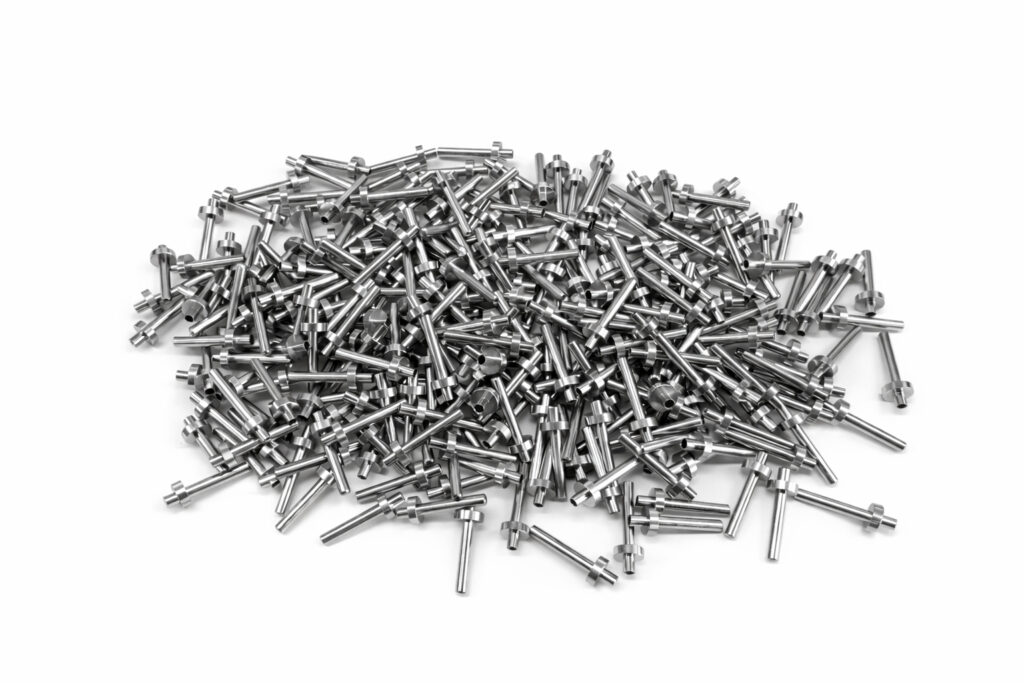
항공우주 CNC 가공의 중점 고려 사항
난삭재(Difficult-to-cut materials)의 제어
항공우주 부품은 주로 티타늄 합금(Ti-6Al-4V), 인코넬(Inconel), 스테인리스강 등 고강도·내열성 소재를 사용합니다. 이러한 소재는 가공 시 공구 소모가 극심하고 열 발생이 많아, 극저온 가공(Cryogenic Machining)이나 고압 냉각 시스템을 통해 소재의 변성을 방지해야 합니다.
잔류 응력(Residual Stress) 관리
절삭 가공 과정에서 부품 표면에는 물리적인 힘이 가해집니다. 가공 후 부품 내부에 남은 잔류 응력은 시간이 지나면서 부품의 뒤틀림(Warping)을 유발합니다. 이를 방지하기 위해 가공 중간 단계에서 진공 열처리(Vacuum Heat Treatment)나 응력 제거 어닐링 과정을 필수적으로 거칩니다.
| 구분 | 일반 정밀 가공 | 항공우주 고정밀 가공 | 비고 |
| 기본 공차 | ±0.05mm ~ 0.1mm | ±0.001mm ~ 0.005mm | 약 10~20배 엄격 |
| 동심도/직각도 | 일반 조립 수준 | 초정밀 레이저 측정 기준 | 회전체 진동 방지 |
| 소재 인증 | 일반 성적서 (Mill Sheet) | 원소재 추적성(Traceability) 100% | 위조 부품 방지 |
| 표면 처리 | 단순 산화 방지 | 아노다이징, 패시베이션, 질화 처리 | 내식성 및 경도 극대화 |
| 검사 방식 | 샘플링 검사 | 전수 조사 (CMM, 초음파, 비파괴) | 무결점 원칙 적용 |
5축 가공과 복합 밀링의 시너지
단차가 있고 중공(Hollow) 구조를 가진 형태는 Multi-axis CNC 가공을 통해 한 번의 셋업으로 공정을 끝내는 것이 유리합니다.
셋업 오차 최소화: 부품을 다시 잡는 과정(Re-clamping)에서 발생하는 미세한 위치 오차를 제거하여 동심도(Concentricity)를 극대화합니다.
복잡한 형상 구현: 유체 역학적 설계가 반영된 복잡한 곡면을 가공하기 위해 동시 5축 제어 기술이 적용됩니다.
항공 우주 CNC 부품은 미세한 정밀도가 전체 시스템의 안전을 보장하며, 오차 관리와 신뢰성 강조가 핵심입니다.
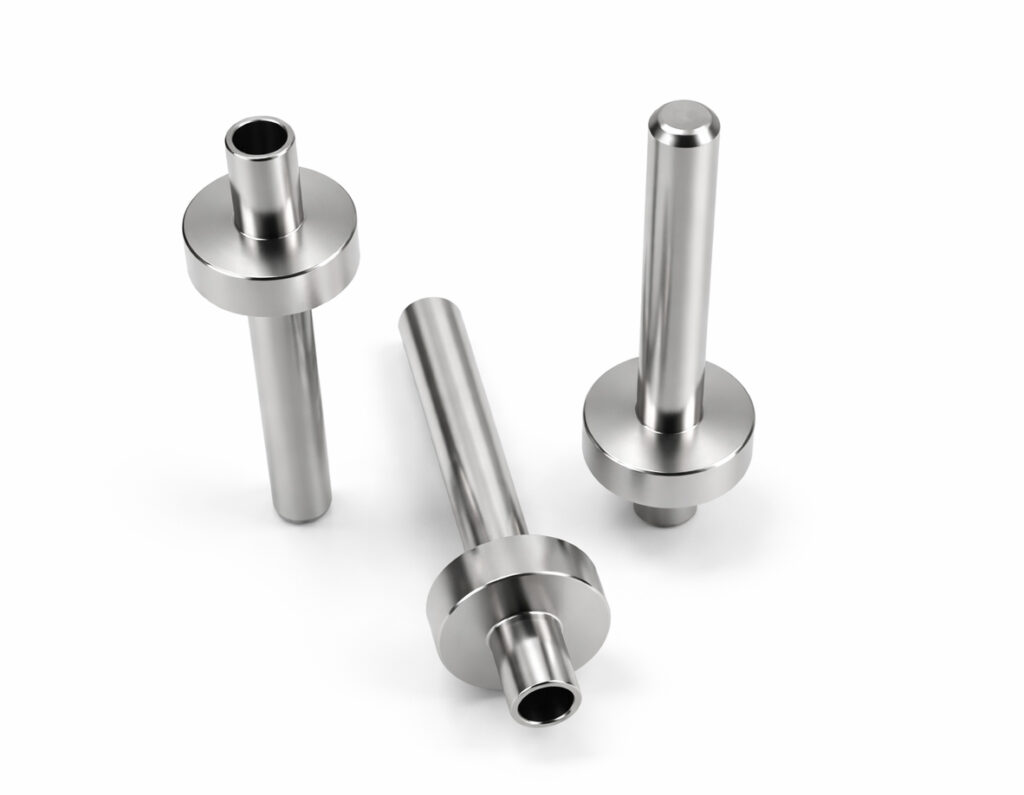
The Significance of CNC Precision Machined Components in the Aerospace Industry
The aerospace industry is classified as one of the most demanding manufacturing sectors in terms of quality standards and process reliability. During flight, components are exposed to extreme temperature fluctuations, high-frequency vibration, repetitive fatigue loads, and subtle structural deformation. In such an environment, even a single dimensional deviation in a component can directly compromise overall system safety.
For this reason, aerospace components are not regarded as merely “precisely machined metal parts.” Instead, they are treated as high-reliability engineering outcomes in which design, material selection, process planning, dimensional error control, and quality verification are organically interconnected. CNC precision machining has established itself as a core manufacturing technology capable of meeting these stringent requirements.
The Fundamental Nature of Precision Required in Aerospace Components
Absolute Dimensional Accuracy and Repeatability
Aerospace components must maintain not only single-part accuracy but also consistent quality throughout mass production. The ability to repeatedly reproduce identical geometries within micrometer-level (μm) tolerances is the result of a comprehensive technological framework, encompassing CNC machine capability, optimized cutting conditions, process stability, and systematic machine calibration cycles.
Geometric Accuracy, Concentricity, and Straightness
Although pin, shaft, and sleeve-type components may appear as simple cylindrical forms, geometric errors such as concentricity, cylindricity, and straightness directly influence friction, leakage, and vibration behavior in aerospace systems. Even minor axial misalignment can lead to fatigue failure under high-speed rotational conditions.
Surface Roughness and Micro-Defect Control
In aerospace components, surface quality is not merely an aesthetic concern but a functional requirement. Surface roughness values, typically controlled using Ra metrics, affect friction coefficients, wear resistance, and fatigue life. Micro-scratches or burrs can act as crack initiation sites, significantly reducing component longevity.
Key Process Considerations in CNC Precision Machining
Process Design Based on Material Characteristics
Materials commonly used in aerospace applications include stainless steels, titanium alloys, and nickel-based superalloys. These high-strength, heat-resistant materials exhibit high cutting resistance and rapid tool wear, making tool selection and cutting parameter optimization critical to maintaining dimensional accuracy.
Thermal Deformation and Residual Stress Control
Localized heat generation during machining is a major cause of component distortion. Long pin or shaft-type parts are particularly susceptible to dimensional changes after machining due to thermal expansion. To mitigate this, optimized machining sequences, multi-stage cutting strategies, and advanced cooling techniques are essential.
Consistency of Reference Datums Across Processes
Aerospace components are typically completed through multiple machining stages. If reference datums shift even slightly between processes, cumulative dimensional errors can occur. In CNC precision machining, maintaining consistent datums is as critical as the initial design itself.
Comparison of Quality Control Focus: General vs Aerospace CNC Components
| Control Item | General Industrial CNC Components | Aerospace CNC Components |
|---|---|---|
| Dimensional Tolerance | ±0.01–0.05 mm | ±0.002–0.005 mm |
| Repeatability | Process-level variation acceptable | Full-process repeatability mandatory |
| Surface Roughness | Appearance and basic function focused | Fatigue life and friction behavior considered |
| Process Traceability | Optional | Full-process traceability required |
| Reliability Verification | Sample-based inspection | Lot-based, long-term data validation |
Error Management as the Core of Aerospace Manufacturing
The most critical principle in aerospace component manufacturing is not the elimination of error, but the ability to predict and control it. Perfect zero-error machining does not exist in practice; however, when the direction and magnitude of deviations are precisely managed, overall system stability can be ensured.
CNC precision machining for aerospace applications relies on this philosophy, integrating process data, statistical control, and long-term performance validation.
Key Focus Areas in Aerospace CNC Machining
Control of Difficult-to-Cut Materials
Aerospace components frequently utilize difficult-to-cut materials such as titanium alloys (Ti-6Al-4V), Inconel, and high-grade stainless steels. These materials generate excessive heat and accelerate tool wear during machining. To prevent material degradation, advanced techniques such as cryogenic machining and high-pressure coolant systems are often employed.
Residual Stress Management
Mechanical forces applied during cutting introduce residual stress into component surfaces. If left uncontrolled, residual stress can cause warping over time. To address this, intermediate vacuum heat treatment or stress-relief annealing processes are routinely applied during machining sequences.
Comparison Between General Precision Machining and Aerospace Ultra-Precision Machining
| Category | General Precision Machining | Aerospace Ultra-Precision Machining | Remarks |
|---|---|---|---|
| Basic Tolerance | ±0.05–0.1 mm | ±0.001–0.005 mm | Approximately 10–20 times stricter |
| Concentricity / Squareness | Standard assembly-level | Laser-based ultra-precision measurement | Prevents rotational vibration |
| Material Certification | Standard mill certificate | 100% raw material traceability | Prevents counterfeit parts |
| Surface Treatment | Basic oxidation protection | Anodizing, passivation, nitriding | Maximizes corrosion resistance and hardness |
| Inspection Method | Sampling inspection | Full inspection (CMM, ultrasonic, NDT) | Zero-defect principle |
Synergy of 5-Axis Machining and Multi-Task Milling
Components featuring stepped geometries and hollow structures benefit significantly from multi-axis CNC machining, allowing completion in a single setup.
Minimized Setup Error
Eliminating re-clamping reduces positional errors and maximizes concentricity.
Complex Geometry Capability
Simultaneous 5-axis control enables machining of complex curved surfaces derived from fluid dynamics and aerodynamic design requirements.
Conclusion
In aerospace CNC components, micrometer-level precision directly ensures system safety. The essence lies in disciplined error control and uncompromising reliability. CNC precision machining, when executed with advanced material control, stress management, and multi-axis capability, becomes a foundational technology supporting the safety and performance of aerospace systems.
추가 정보
항공우주 CNC 정밀 가공 부품은 단품의 절대 치수 오차뿐 아니라, 양산에서도 동일 형상을 반복 재현하는 공정 신뢰성이 핵심입니다. 고속 진동·반복 피로 하중·극한 온도 변화 환경에서는 형상 정밀도(동심도·직진도)와 표면 조도(Ra), 미세 결함(스크래치·버)까지 기능 요인으로 연결됩니다.
핵심 포인트
- 치수 공차는 “숫자”만이 아니라 장비 보정 주기, 공정 안정성, 측정 체계가 함께 지탱하는 결과입니다.
- 핀·샤프트·슬리브 계열은 동심도, 원통도, 직진도 편차가 마찰·누설·진동 특성에 직접 영향을 줄 수 있습니다.
- 표면 조도(Ra)와 미세 버(Burr)는 피로 균열의 시작점이 될 수 있어 결함 관리가 중요합니다.
- 난삭재(티타늄 합금, 니켈 기반 초내열 합금 등)는 공구 마모와 열 발생이 커 절삭 조건과 냉각 전략이 정밀도 유지의 핵심입니다.
- 열 변형과 잔류 응력은 가공 후 뒤틀림(Warping)과 치수 이동을 만들 수 있어 공정 순서 최적화가 필요합니다.
- 다공정 가공에서는 기준면(reference datum) 일관성이 누적 오차를 좌우합니다.
- 추적성(Traceability)과 공정 이력 관리는 단발성 합격보다 장기 신뢰성 검증에 연결됩니다.
- 5축/복합 가공은 재클램핑(Re-clamping) 오차를 줄여 동심도와 형상 재현성을 안정화하는 방향으로 활용됩니다.
FAQ
항공우주 CNC 부품에서 “정밀도”는 무엇을 의미하나요?
단품의 치수 공차뿐 아니라, 동일 형상을 반복적으로 재현하는 반복 정밀도와 공정 변동의 통제가 포함됩니다. 형상 정밀도(동심도·직진도·원통도)와 표면 조도(Ra)도 기능 성능에 직접 연결되는 항목으로 취급되는 경우가 많습니다.
왜 항공우주 부품은 기준면(datum) 관리가 그렇게 중요한가요?
다공정에서 기준면이 공정마다 미세하게 달라지면 오차가 누적되어 조립 정렬과 작동 간극이 흔들릴 수 있습니다. 기준면 정의와 고정(셋업 방식, 지그 설계, 측정 기준)까지 포함해 일관성을 유지하는 흐름이 중요해집니다.
핀·샤프트 부품에서 동심도와 직진도가 왜 민감한가요?
고속 회전·진동 환경에서는 미세 편심이 피로 하중을 키우고 진동 특성을 악화시킬 수 있습니다. 누설(Sealing)과 마찰 계수 변화로도 이어질 수 있어, 단순 치수보다 형상 오차 관리가 먼저 요구되는 경우가 있습니다.
표면 조도(Ra) 관리가 피로 수명과 어떤 관계가 있나요?
표면 거칠기와 미세 스크래치는 응력 집중을 만들고 균열 개시점으로 작동할 수 있습니다. 따라서 조도 수치뿐 아니라 가공결 방향, 버 잔류, 미세 결함의 분산까지 함께 관리하는 편이 좋습니다.
난삭재 가공에서 공구 마모는 어떤 품질 문제로 나타나나요?
치수 드리프트(서서히 커지는 편차), 코너 라운딩, 표면 거칠기 악화, 열 착색 등이 동반될 수 있습니다. 공구 교체 기준과 절삭 조건(속도·이송·절입), 냉각 전략을 함께 고정하면 분산을 줄이는 데 도움이 될 수 있습니다.
잔류 응력은 왜 문제가 되고, 어떻게 관리하나요?
가공 하중과 열 영향으로 내부에 잔류 응력이 남으면 시간이 지나 뒤틀림과 치수 이동이 나타날 수 있습니다. 공정 중간의 응력 완화 열처리(예: 진공 열처리, 응력 제거 어닐링)와 가공 순서 최적화, 다단 가공이 함께 고려됩니다.
항공우주 부품의 검사 방식은 일반 산업과 무엇이 다른가요?
샘플링 중심보다 전수 검사(CMM, 비파괴 검사 등)와 로트 단위의 데이터 축적이 강조되는 경우가 많습니다. 측정값의 합격 판단뿐 아니라, 오차 방향성과 범위를 예측하고 통제하는 관리가 중요해집니다.
5축 가공은 어떤 상황에서 효과가 커지나요?
단차·중공(Hollow) 구조, 복잡 곡면처럼 셋업을 여러 번 해야 하는 형상에서 효과가 커질 수 있습니다. 재클램핑 오차를 줄여 동심도와 기준면 일관성을 높이는 방향으로 활용되는 경우가 많습니다.
관련 주제 확장
1) 오차를 “없애는 것”보다 “예측하고 통제하는 것”
항공우주 제조에서 완전한 무오차 가공은 현실적으로 어렵기 때문에, 오차의 방향성과 범위를 정량적으로 관리하는 접근이 중요해집니다. 공정 능력(Cpk) 관점의 추세 관리와 장비 보정 주기, 측정 체계의 일관성이 결합될 때 반복 재현성이 안정화됩니다. 결과적으로 품질은 단발성 합격이 아니라, 장기 데이터 기반으로 설명 가능한 형태에 가까워집니다.
2) 열 변형과 냉각 전략은 치수 안정성의 핵심 변수
난삭재는 절삭 저항이 크고 열이 집중되기 쉬워 가공 중·후의 치수 이동이 발생할 수 있습니다. 고압 냉각, 공정 분할(다단 가공), 절삭 조건 최적화는 열 변형을 줄이는 대표 전략으로 쓰입니다. 길이가 긴 샤프트 계열은 특히 열팽창과 응력 해제로 뒤틀림이 나타날 수 있어 순서 설계가 중요합니다.
3) 표면 품질은 외관이 아니라 기능 파라미터
표면 조도(Ra)는 마찰 계수, 내마모성, 피로 수명과 연결될 수 있으며, 버와 미세 스크래치가 균열 개시점이 될 수 있습니다. 표면 결함은 “있다/없다”보다 분포와 재현성(어느 공정, 어느 위치에서 반복되는지) 추적이 중요해집니다. 따라서 디버링 기준, 세정, 취급 오염까지 포함해 표면을 공정 체인으로 관리하는 흐름이 유리합니다.
4) 기준면 일관성과 5축 가공의 조합
다공정에서 기준면이 흔들리면 누적 오차가 증가하므로, 한 번의 셋업으로 공정을 끝내는 방향이 품질에 유리할 수 있습니다. 5축/복합 가공은 재클램핑에서 생기는 미세 위치 오차를 줄여 동심도와 형상 재현성을 높이는 데 도움이 됩니다. 복잡 곡면이나 유체 역학적 설계가 반영된 형상에서는 동시 5축 제어가 가공 효율과 품질을 동시에 좌우할 수 있습니다.
항공우주 부품의 공차·형상·표면 요구를 CNC 관점으로 확장하려면 CNC 정밀 가공 페이지의 공정·가공 조건 맥락을 함께 연결하는 방식이 유용합니다. 검사 체계와 측정 기준을 정리할 때는 품질기준 페이지의 측정·판정 흐름과 함께 구성하면 문장 연결이 자연스러워집니다.